
Introduction: Your Path to Becoming a Skincare Specialist
The professional beauty and wellness industry is expanding rapidly, driving unprecedented demand for qualified skin experts. If you want to know how to become an esthetician, you need to understand both the educational pathways and the regulatory licensing systems that govern this rewarding profession.
As a professional skincare specialist, your daily work will sit at the intersection of biological science and hands-on client care. Whether you are currently researching introductory esthetician school requirements or trying to figure out exactly how long does it take to become an esthetician, this comprehensive guide will map out every step of the journey from day one of training to opening your own treatment studio.
Quick Answer: To become an esthetician, you must complete an approved training program at an accredited school (typically 600 to 1,000 hours), pass your state board’s practical and written examinations, and secure your official license. The entire process generally takes between 4 to 9 months of full-time study.
What Does an Esthetician Do? Roles, Responsibilities, and Daily Duties
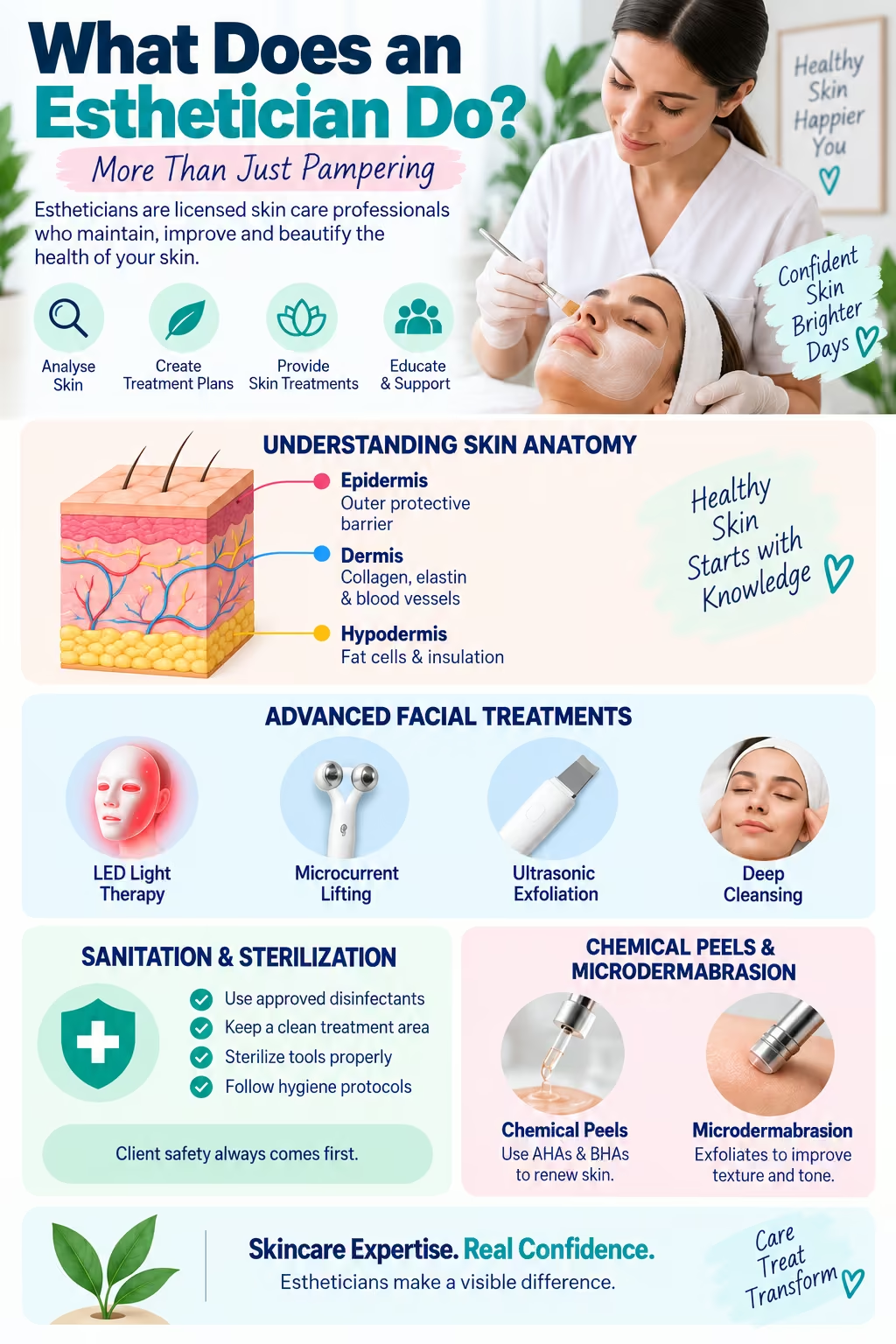
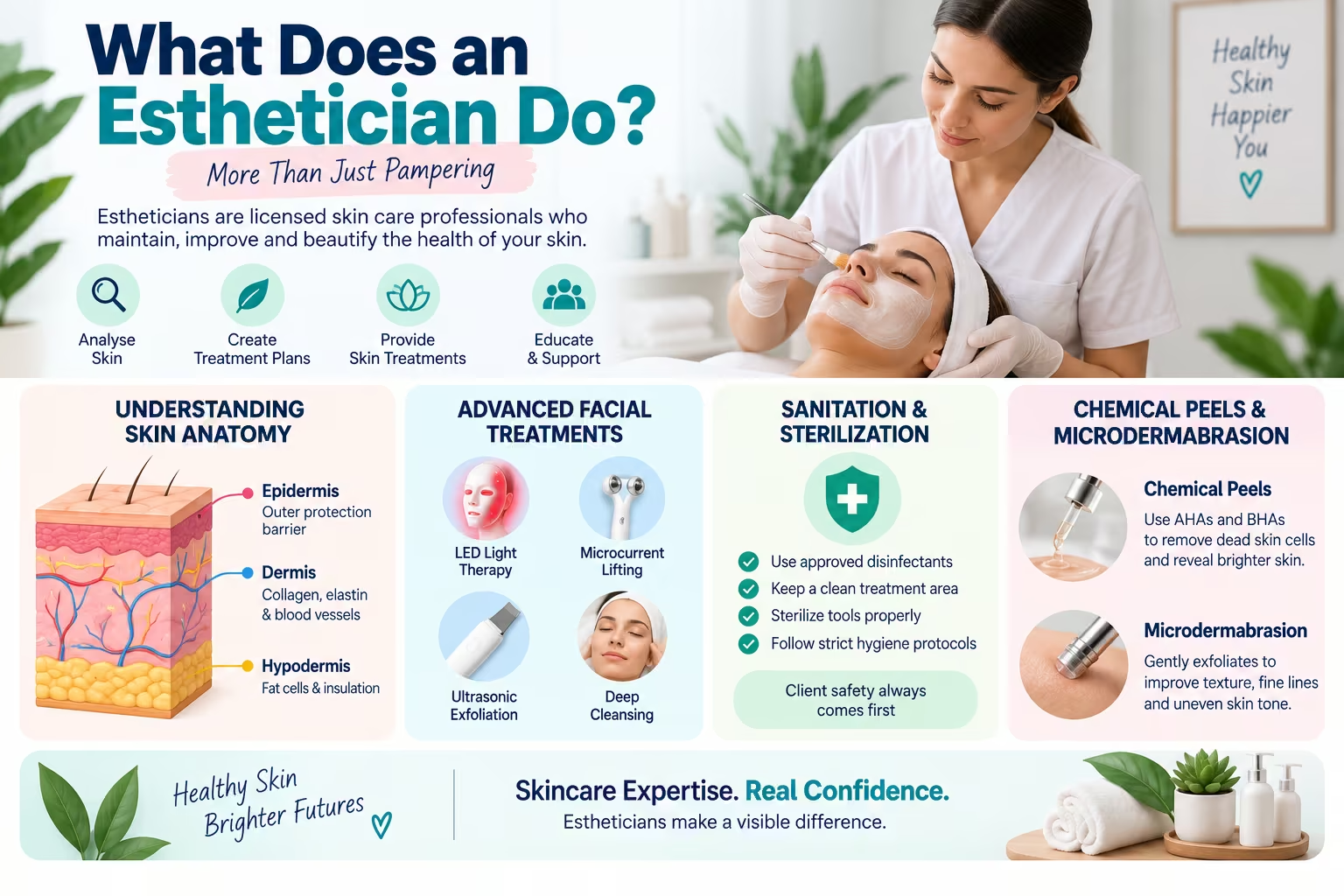
To accurately define what does an esthetician do, you have to look beyond basic pampering. Estheticians are licensed professionals who focus entirely on maintaining, improving, and beautifying the health of the human skin.
A typical day in a treatment room involves performing thorough skin analyses, designing customised homecare regimens, and administering non-invasive therapies to address chronic issues like hyperpigmentation, premature ageing, and stubborn acne.
Understanding Skin Anatomy and Physiology
Every successful treatment begins with a deep, scientific understanding of skin anatomy and physiology. You cannot safely alter the skin’s appearance without knowing how its complex cellular structure functions from the inside out.
When analyzing a client’s face, you will constantly interact with the three principal layers of the skin:
- The Epidermis: The outermost barrier that regulates moisture retention and acts as the body’s primary shield against environmental damage.
- The Dermis: The structural powerhouse containing rich supplies of collagen, elastin, blood vessels, and nerves. This is where deeper changes in skin elasticity occur.
- The Hypodermis (Subcutaneous Layer): The deepest layer composed of adipose tissue (fat cells) that serves to insulate the body and cushion underlying muscle groups.
Mastering Advanced Facial Treatments, Sanitation, and Sterilization Protocols
Modern esthetics relies heavily on advanced facial treatments that require technical precision. Practitioners routinely use specialised modalities such as LED light therapy, microcurrent muscle lifting, and ultrasonic extractions to achieve visible results.
Operating these advanced devices demands absolute compliance with rigid sanitation and sterilization protocols. Because you will be working closely with bodily fluids, open comedones, and broken skin barriers, maintaining a clean environment is non-negotiable. This means using EPA-registered, hospital-grade disinfectants on all non-porous tools and executing proper autoclaving for metal implements between every single client appointment.
Specialised Training: Chemical Peels and Microdermabrasion Training
As you progress through your education, you will complete rigorous chemical peels and microdermabrasion training. These resurfacing methods remove damaged outer cells to expose healthier skin beneath.
- Chemical Exfoliation: You will learn to work with varying concentrations of alpha-hydroxy acids (AHAs) like glycolic acid, and beta-hydroxy acids (BHAs) like salicylic acid, safely altering skin pH to dissolve intercellular glue.
- Mechanical Exfoliation: Microdermabrasion involves using diamond-tip or crystal-stream devices to physically polish away dead skin cells, correcting fine lines, minor scarring, and uneven texture.
Esthetician School Requirements and Choosing the Right Program
Before you can apply for your professional license, you must first satisfy the foundational educational requirements set by local regulatory authorities.
What to Expect from an Esthetics Program Curriculum
A comprehensive esthetics program curriculum balances rigorous classroom theory with intensive hands-on practical training. You will spend your first few weeks buried in textbooks studying chemistry, product ingredient formulations, electricity safety, and facial massage techniques.
Once you demonstrate safety proficiency, you will transition to working on mannequins and fellow classmates, eventually moving on to real members of the public in a supervised school spa environment.
Completing Clinical Practice Hours at Accredited Cosmetology Schools
To graduate, you must log a specific quota of clinical practice hours at accredited cosmetology schools. These mandatory floor hours are strictly monitored by instructors. They ensure you can perform under pressure, interact professionally with diverse clientele, manage your appointment timing, and execute treatments flawlessly without direct prompting.
Evaluating Online Esthetician Certification Programs vs. Local Options (Best Esthetician Schools Near Me)
Many prospective students search for online esthetician certification programs hoping for a flexible, remote learning experience. However, because skincare is an inherently physical, high-touch trade, fully online programs cannot qualify you for a state license.
While some schools offer hybrid options for the theoretical portions, you will ultimately need a brick-and-mortar facility to complete your hands-on training. It is vital to look for the best esthetician schools near me that offer robust, state-approved practical hours.
| Program Feature | Online/Hybrid Programs | Local Accredited Schools |
|---|---|---|
| Theory Learning | Flexible, completed from home via digital portals. | Traditional classroom lectures and group discussions. |
| Hands-On Practice | Limited or requires brief, intensive weekend bootcamps. | Daily supervised practice on real clients in a school clinic. |
| Licensure Eligibility | Rarely satisfies full state requirements on its own. | Designed specifically to meet state board requirements. |
Classroom Realities: How Hard is Esthetician School?
If you are wondering how hard is esthetician school, the answer depends heavily on your study habits and manual dexterity. The academic side requires memorising complex medical terminology, muscle groups, and biochemical reactions.
The practical side requires excellent hand-eye coordination and spatial awareness. The workload moves very quickly, so consistency and physical stamina are essential to keeping up.
Financial Planning: How Much Does it Cost to Become an Esthetician?
When factoring in how much does it cost to become an esthetician, you must look at the complete financial picture. Total expenses generally range from £3,000 to £15,000 (or $5,000 to $18,000 USD) depending on the school’s prestige and geographical location.
Your total investment includes:
- Standard institutional tuition fees
- A professional student kit (containing state-board approved tools, cleansers, and personal protective equipment)
- Required textbooks and digital learning licenses
- State examination and final registration fees
How To Get an Esthetician License: Certification and State Rules
Once your graduation certificates are signed off by your school, you are ready to tackle the formal licensing process. You cannot legally charge clients for skincare services until you have earned an official license.
Navigating Esthetician License Requirements by State and the State Board of Cosmetology
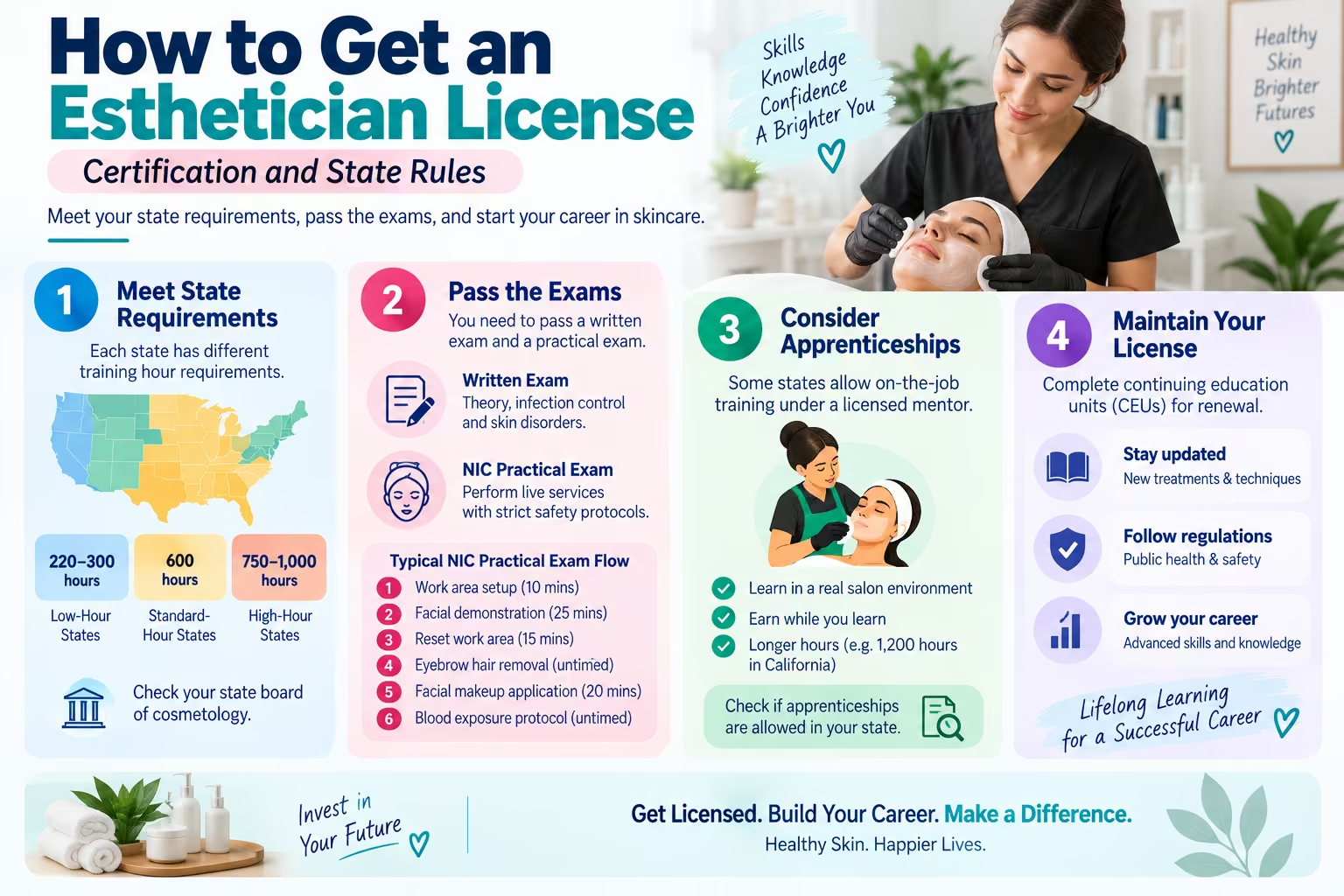
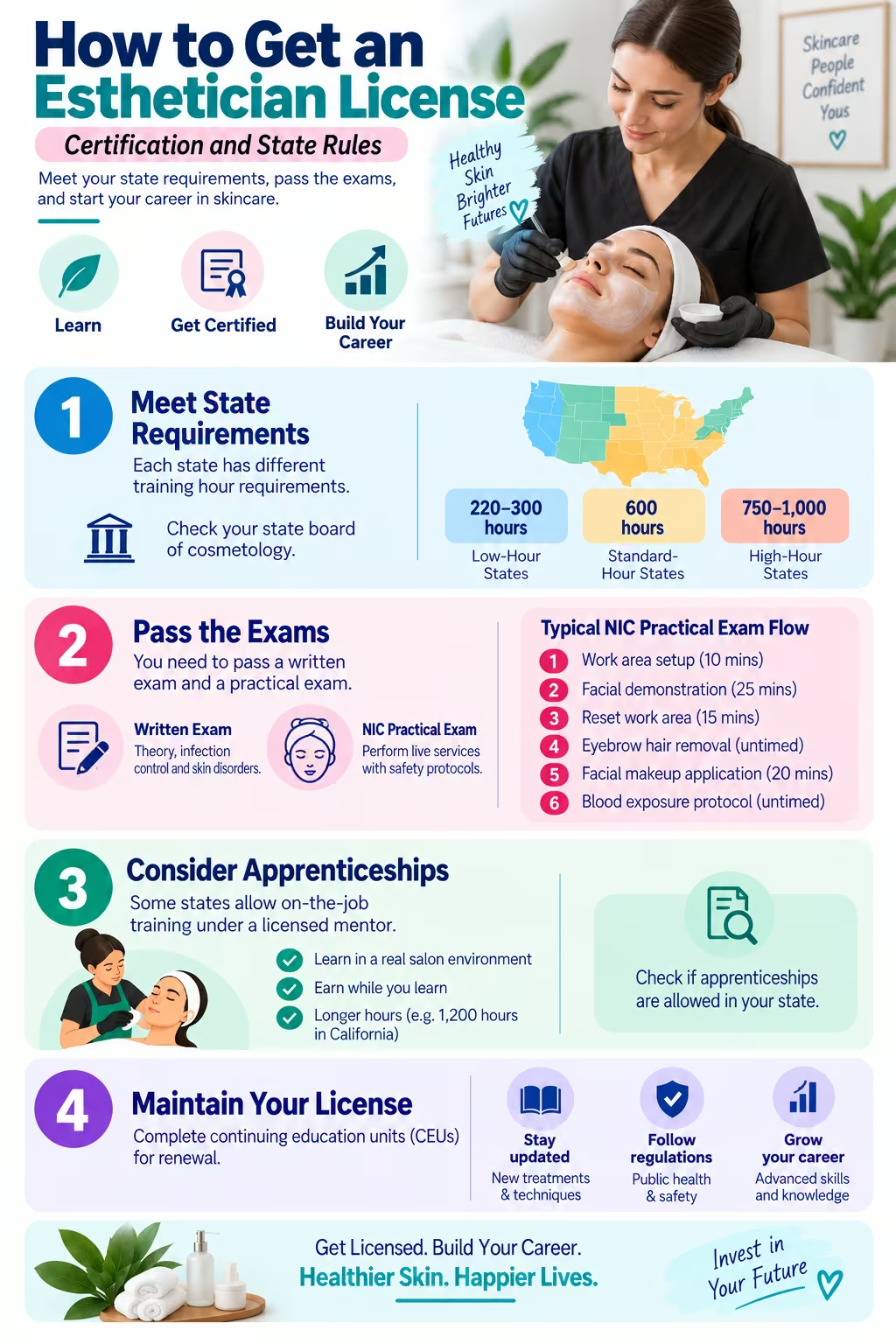
Learning how to get an esthetician license requires keeping a close eye on regional variations. There is no single, unified national license. Instead, individual esthetician license requirements by state dictate exactly what you need to do, with each independent state board of cosmetology setting its own rules.
Required training hours vary wildly across different regions:
- Low-Hour States: Florida requires 220 hours (granting a “Facial Specialist” registration), while Pennsylvania requires 300 hours.
- Standard-Hour States: New York, California, Ohio, and North Carolina require a balanced 600 hours of school training.
- High-Hour States: Texas and Illinois require 750 hours, while Georgia and Alabama demand 1,000 full hours of educational training.
Preparing for the Written Exam and the NIC Esthetics Practical Exam
To secure your license, you must pass a two-part examination process. The first part is a computerised written exam covering theory, infection control, and skin disorders.
The second part is the practical test, which is frequently administered via the national NIC esthetics practical exam. This timed assessment requires you to perform live services in front of an evaluator who grades you on strict safety protocols.
[NIC Practical Exam Step-by-Step Flow]
1. Work Area Preparation & Supply Setup (10 Mins)
2. Client Prep & Basic Facial Demonstration (25 Mins)
3. Work Area Reset for Next Services (15 Mins)
4. Eyebrow Hair Removal (Waxing & Tweezing) (Untimed)
5. Professional Facial Makeup Application (20 Mins)
6. Emergency Blood Exposure Protocol Drill (Untimed)
On-the-Job Training: Exploring Esthetician Apprenticeships
If traditional schooling does not fit your learning style, check if your region permits esthetician apprenticeships. States like California and Georgia allow you to complete your training directly under a licensed mentor inside an active salon.
Be aware that apprenticeship hour requirements are usually double the length of school programs (for instance, 1,200 hours instead of 600 hours in California), but they allow you to earn an income while learning the trade.
Maintaining Compliance: Continuing Education Units (CEUs) for Esthetics
Earning your initial license is only the first step. To keep your credential active, you must complete regular continuing education units (CEUs) for esthetics during every renewal cycle. These courses ensure you stay up to date on evolving public health regulations, chemical safety guidelines, and advanced treatment methodologies.
The Difference Between an Esthetician and a Medical Esthetician
As you map out your long-term career goals, it is crucial to understand the difference between esthetician and medical esthetician career pathways. While both focus on skin health, their work environments and treatment boundaries are entirely distinct.
How to Become a Medical Esthetician through Clinical Aesthetician Certification
If you want to work alongside healthcare professionals, learning how to become a medical esthetician should be your primary goal. This path requires you to earn a baseline esthetics license first, followed by an advanced clinical aesthetician certification.
This specialised training teaches you how to care for skin pre- and post-surgery, treat severe medical conditions like radiation dermatitis, and safely handle clinical-grade topical chemistries.
Career Paths: Medical Spa (Medspa) Employment vs. Dermatology Clinic Assistant Roles
Earning advanced medical credentials opens up diverse corporate career paths:
- Medical Spa (Medspa) Employment: Working in a hybrid environment where clinical results meet luxury relaxation. You will perform medical-grade treatments under the remote direction of an on-site medical director.
- Dermatology Clinic Assistant: Working directly alongside a board-certified dermatologist. Your responsibilities will center on prepping patients, assisting with complex biopsies, and guiding clients through medical-grade skincare regimens.
Expanding Your Scope: Laser Technician Licensing
To maximise your value in a clinical setting, you should pursue independent laser technician licensing. This credential gives you the legal authority to operate powerful energy-based devices. You will be able to perform highly profitable treatments like laser hair removal, IPL (Intense Pulsed Light) photofacials, and fractional skin resurfacing to correct deep scar tissue.
International Pathways: How to Become an Aesthetician in the UK
If you are looking to base your career across the Atlantic, the process shifts from state-regulated licenses to standardised vocational qualifications.
Finding the Right Path: Aesthetician Courses UK and Earning a Beauty Therapist NVQ Level 3
To successfully learn how to become an aesthetician UK, you should look for approved training providers rather than a state board. The gold standard for employment in the UK beauty industry is enrolling in premier aesthetician courses UK to earn a beauty therapist NVQ Level 3 (National Vocational Qualification).
This internationally recognized framework covers advanced electrical facials, body treatments, and microdermabrasion. It ensures you meet the strict criteria required to secure professional insurance and work in luxury UK day spas, high-street clinics, or medispa environments.
Long-Term Growth: Esthetician Salary, Career Outlook, and Business Strategies
The financial and professional rewards in this industry scale directly with your level of expertise, specialization, and business acumen.
Financial Expectations: Esthetician Salary and Career Outlook
Reviewing the current esthetician salary and career outlook reveals excellent income potential. Entry-level practitioners typically earn hourly wages alongside client tips and product retail commissions.
As you specialize in advanced clinical procedures or build a dedicated client following, your earning power grows significantly. Experienced medical skin specialists and independent studio owners can routinely clear substantial incomes well above industry averages.
[Annual Esthetician Income Spectrum]
Entry-Level (Salon/Spa Employee): £25,000 – £32,000 ($35k – $45k USD)
Mid-Career (Clinical/Medspa): £35,000 – £48,000 ($48k – $65k USD)
Advanced Expert / Studio Owner: £55,000 – £75,000+ ($75k – $100k+ USD)
Strategic Steps to Start an Esthetician Business and Master Salon and Spa Management
If you have an entrepreneurial mindset, you can follow clear steps to start an esthetician business. You will want to move away from hourly employment by renting a private treatment suite, choosing a niche, and building a distinct brand identity.
To run a profitable practice over the long term, you must master the core principles of salon and spa management. This means keeping a close eye on product backbar inventory costs, managing client acquisition expenses, setting profitable service menu pricing, and using social media marketing to keep your treatment books consistently full.
Starting Your Career in Professional Skincare
Embarking on the journey to how to become an esthetician opens the door to a dynamic, financially rewarding career centered on helping people feel truly confident in their own skin. By choosing an accredited school, mastering skin anatomy, navigating your local licensing boards, and pursuing advanced certifications, you build a resilient professional foundation.
The skincare field is evolving rapidly, offering endless opportunities for dedicated specialists to thrive. Take that decisive first step today by touring local training facilities, researching your regional requirements, and stepping confidently into the growing world of professional skincare.
FAQ - How to Become an Esthetician: The Ultimate Career Guide
Completing your training generally takes between 4 to 9 months for full-time students, or 9 to 18 months for those studying part-time. The exact timeline depends on your region’s mandatory hours, which vary anywhere from 220 to 1,000 training hours.
To enrol in a premier Level 3 UK training program, you generally need to hold a baseline NVQ Level 2 in Beauty Therapy or have equivalent qualifications in basic skin care. Some intensive, fast-track courses allow you to complete both levels combined if you meet their academic entry requirements.
A standard esthetician works primarily in day spas or salons focusing on cosmetic skin beautification, superficial relaxation treatments, and basic hair removal. A medical esthetician works in clinical settings alongside doctors, performing advanced treatments like laser therapies, deep chemical peels, and pre- and post-operative skin care.
No, you cannot complete your license requirements entirely online. While some programs allow you to study theory and skin anatomy through remote modules, every regulatory board requires a substantial number of hands-on, supervised practical hours inside a physical clinic facility.
ADI-R training teaches p
The exam is highly demanding because it requires absolute precision under strict time limits. Candidates are evaluated on exact sanitation procedures, client protection, and technical service delivery. It is not difficult if you practice consistently, but any failure to follow basic infection control protocols will result in an immediate deduction of points.
rofessionals how to conduct structured developmental-history interviews using the Autism Diagnostic Interview-Revised.
Apprenticeships offer excellent real-world business experience and allow you to earn an income while you learn. However, they take twice as long to complete compared to traditional schooling, and finding a licensed salon owner who is willing to sponsor and mentor an apprentice can be highly competitive.