
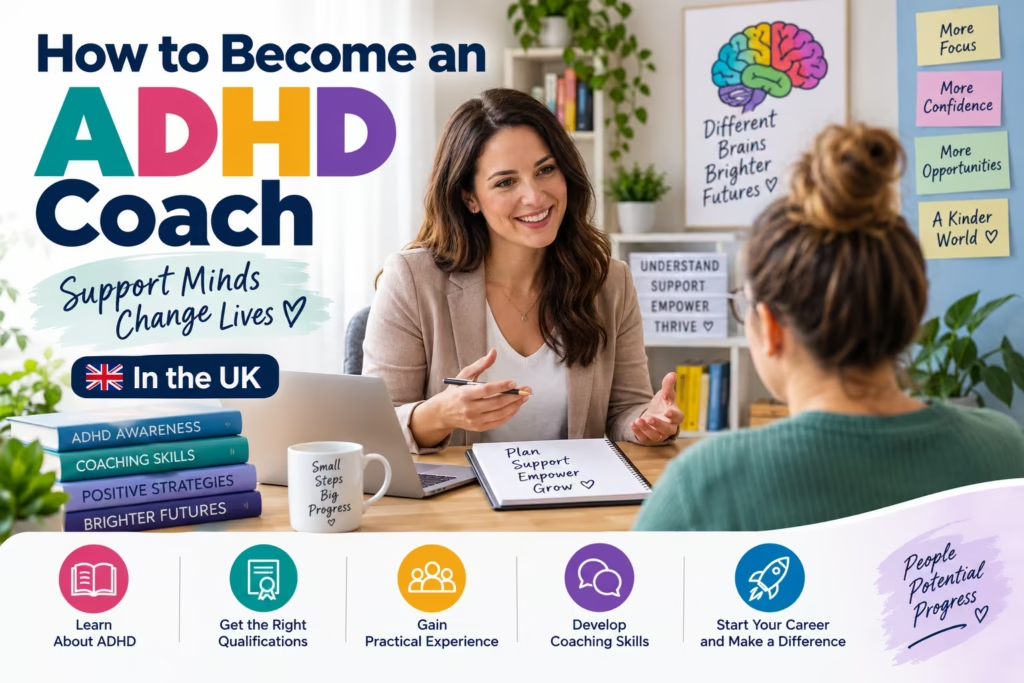
Introduction to the ADHD Coaching Profession
If you want to know how to become an adhd coach, you are looking at one of the fastest-growing niches within modern professional development. This career path involves supporting neurodivergent individuals by equipping them with practical systems to manage their unique cognitive profiles. To get started, you will typically need to complete dedicated adhd coach training uk programmes to build clinical and practical competency.
By obtaining an adhd coaching qualification, you bridge the gap between clinical diagnoses and day-to-day functional success. This professional guide details everything required to secure formal certification, master key methodologies, and build a sustainable private practice or employment path.
Quick Answer
To become an ADHD coach in the UK, choose a training programme accredited by the International Coaching Federation (ICF) or the Professional Association of ADHD Coaches (PAAC). Complete the required training hours, gain supervised practical experience, and secure your credential to practice independently or apply for specialist roles.
What Is ADHD Coaching and How Does It Help Clients?
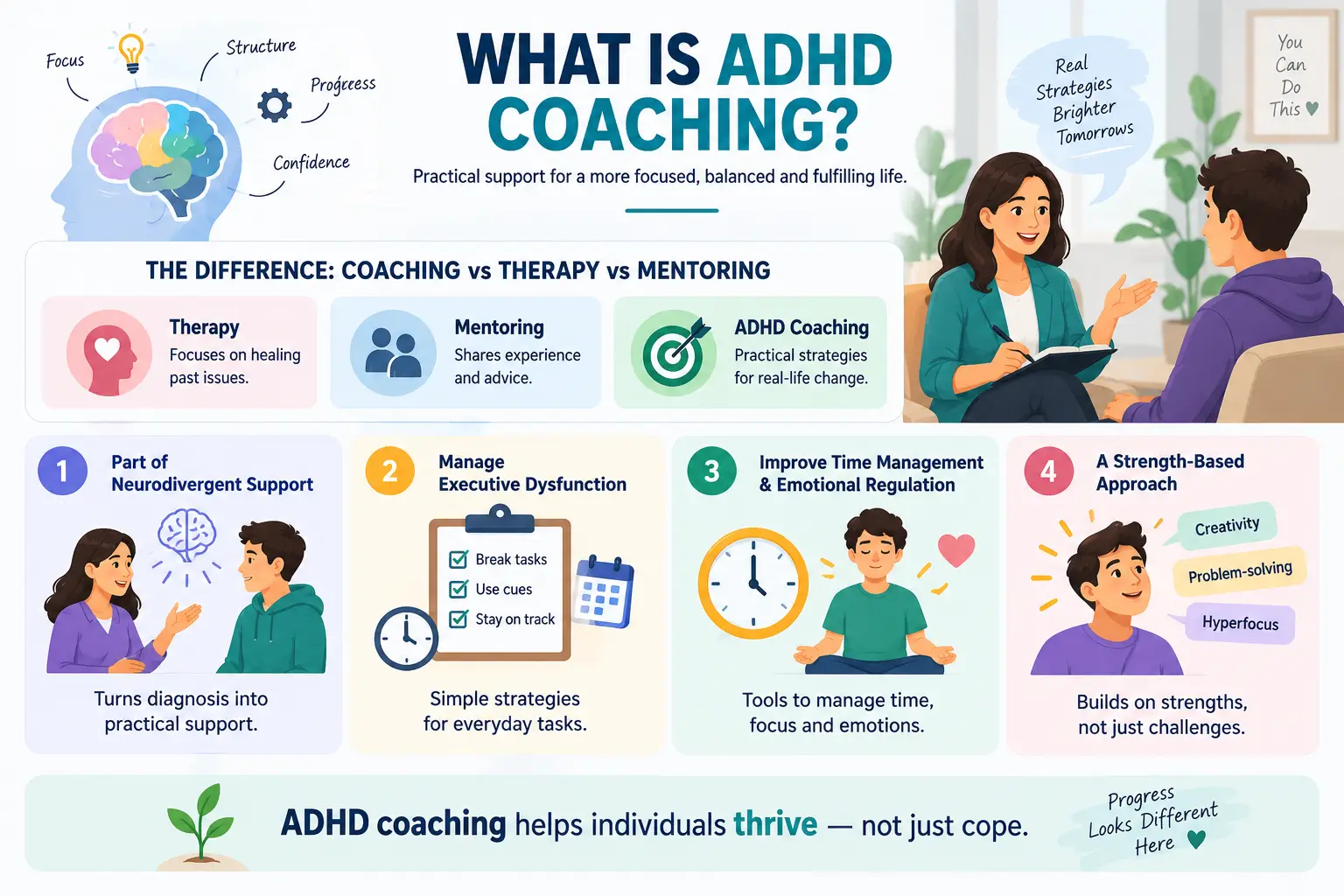
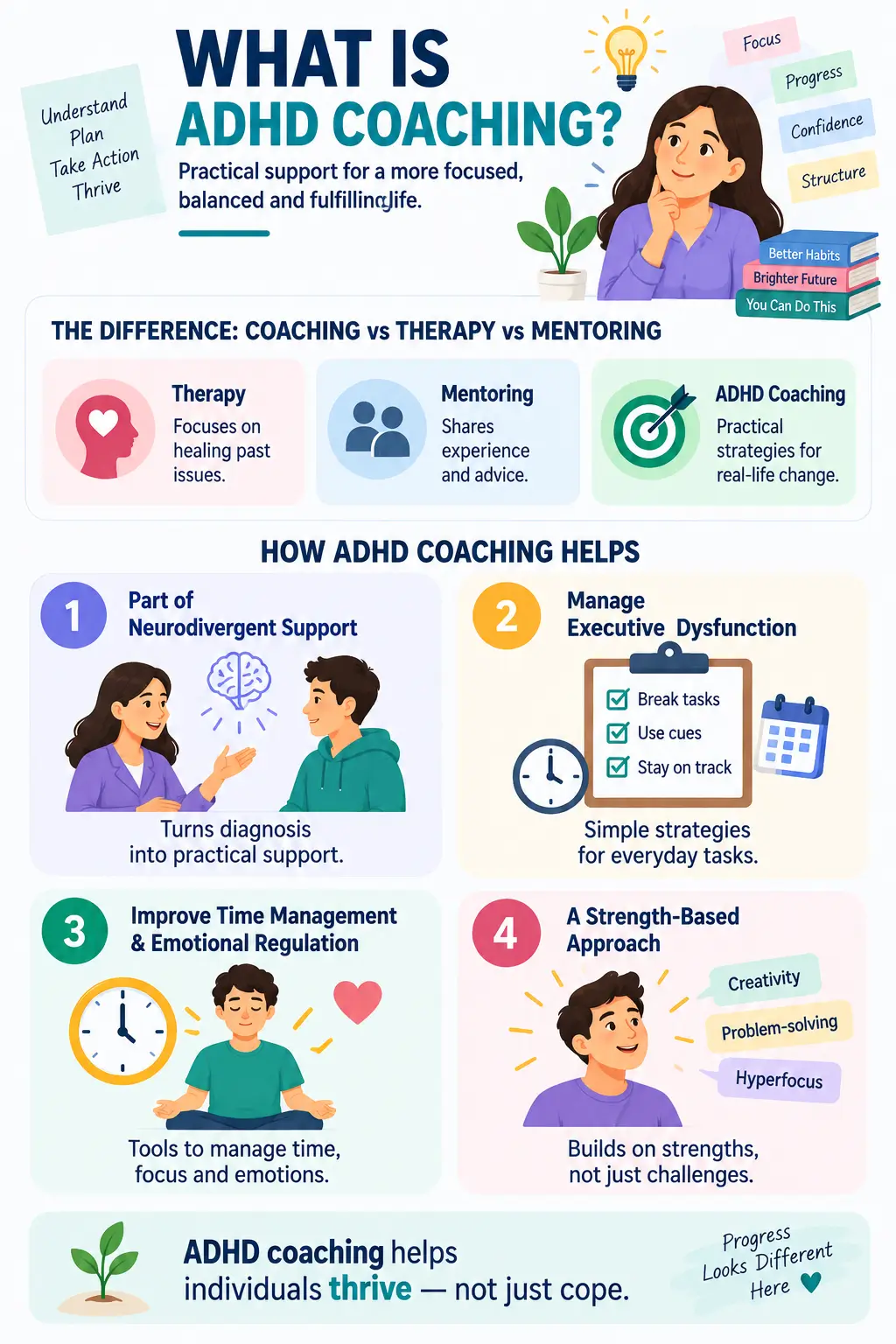
The Difference Between ADHD Coaching, Therapy and Mentoring
ADHD coaching is a highly collaborative, action-oriented intervention tailored specifically to the structural needs of neurodivergent brains. It is distinct from therapy and mentoring:
- Therapy: Focuses primarily on healing past psychological trauma, treating co-occurring clinical conditions like major depression, and exploring deep-seated emotional origins.
- Mentoring: Relies on an expert passing down role-specific wisdom or advice based on their personal career or industry experiences.
- ADHD Coaching: Partners with the client in the present tense to design tailored behavioral strategies, establish robust accountability loops, and bypass immediate functional blockages.
The Role of Neurodivergent Support Services
A professional coach operates as a core pillar within modern neurodivergent support services. Rather than diagnosing or prescribing, the coach steps in post-diagnosis to help the client understand their personal operational manual. They translate clinical insights into functional, everyday routines, reducing the overwhelm that individuals face when navigating neurotypical environments.
Executive Dysfunction Management and Daily Life Support
At the heart of this discipline is executive dysfunction management. Individuals with ADHD struggle with the brain’s commanding executive functions, which control initiation, working memory, and focus allocation. Coaches help clients design custom sensory boundaries, break down massive tasks into bite-sized actions, and implement external cues to counteract short-term memory gaps.
Time Management and Emotional Regulation Strategies
Coaching sessions address chronic challenges around time management and emotional regulation. Clients frequently experience “time blindness,” where they struggle to estimate how long tasks take. Coaches introduce visual timers, backward-scheduling techniques, and emotional grounding exercises to manage the intense rejection sensitivity and frustration that accompany executive blockages.
Strength-Based Coaching Approach for ADHD
Rather than operating from a deficit-focused perspective, professionals employ a strength-based coaching approach. This methodology uncovers a client’s natural hyperfocus, deep creativity, and problem-solving skills. By structuring tasks around what naturally stimulates the client’s dopamine production, coaches help individuals build sustainable momentum instead of relying on pure willpower.
Who Can Become an ADHD Coach?
Can You Be an ADHD Coach Without a Degree?
The definitive answer to can you be an adhd coach without a degree is yes. The field of neurodiversity coaching values specialized training, practical competency, and lived experience over standard university degrees. While a background in psychology or social work is useful, what matters most to employers and clients is holding a recognized coaching credential from an accredited training body.
Essential Skills and Personal Qualities for ADHD Coaches
To thrive in this line of work, you must cultivate specific personal attributes:
- Deep Cognitive Empathy: Understanding that an inability to start a task is an executive block, not a moral failure or laziness.
- Active, Non-Linear Listening: The ability to track a client’s fast-moving or tangential thoughts and extract the core underlying patterns.
- Radical Flexibilty: Recognising when a strategy is failing and quickly pivoting to a new approach without judgment.
Backgrounds That Transition Well into ADHD Coaching
A wide variety of professional backgrounds find a natural transition into this field. Those who understand workplace pressure, educational challenges, or basic mental health frameworks can easily layer on specialized training to build an effective practice.
Opportunities for Teachers, Therapists and Life Coaches
Teachers, counsellors, and existing general life coaches are exceptionally well-positioned for this transition:
[General Educator / Therapist / Life Coach]
│
▼
[Specialised Neurodiversity Training]
│
▼
[Accredited ADHD Specialist Coach Status]
This path allows educators to move away from rigid classroom environments, while therapists can add an action-oriented, forward-facing modality to their existing clinical toolkits.
Becoming an ADHD Specialist Coach
To learn how to become an adhd specialist coach, you must move beyond general life coaching techniques. You need a deep understanding of the neurobiology of attention deficit hyperactivity disorder, how it intersects with various age groups, and how to use specific neurodivergent interventions. This specialized knowledge is what sets a premium practitioner apart from a generalist.
How to Become an ADHD Coach
Step-by-Step Path to Becoming an ADHD Coach
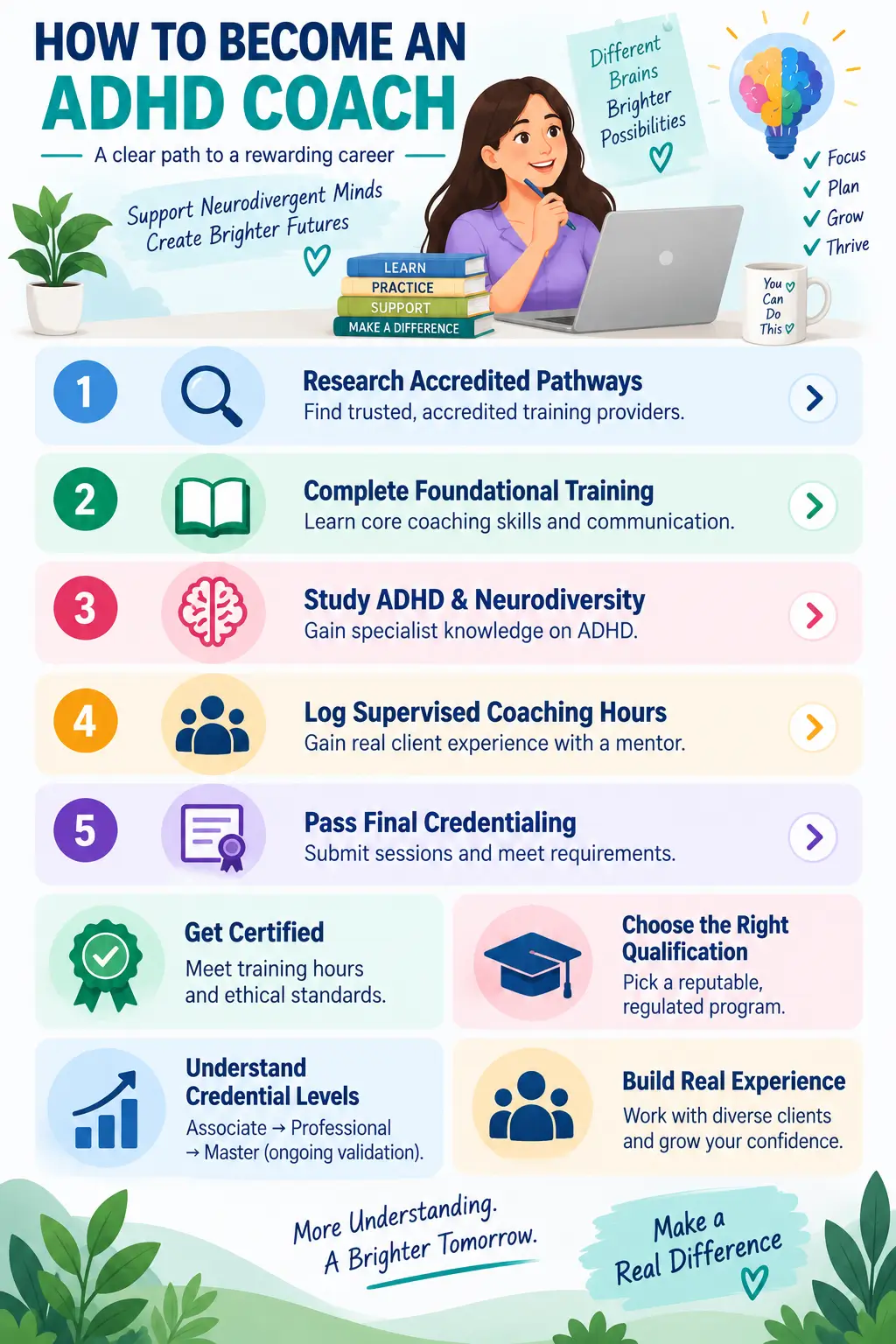
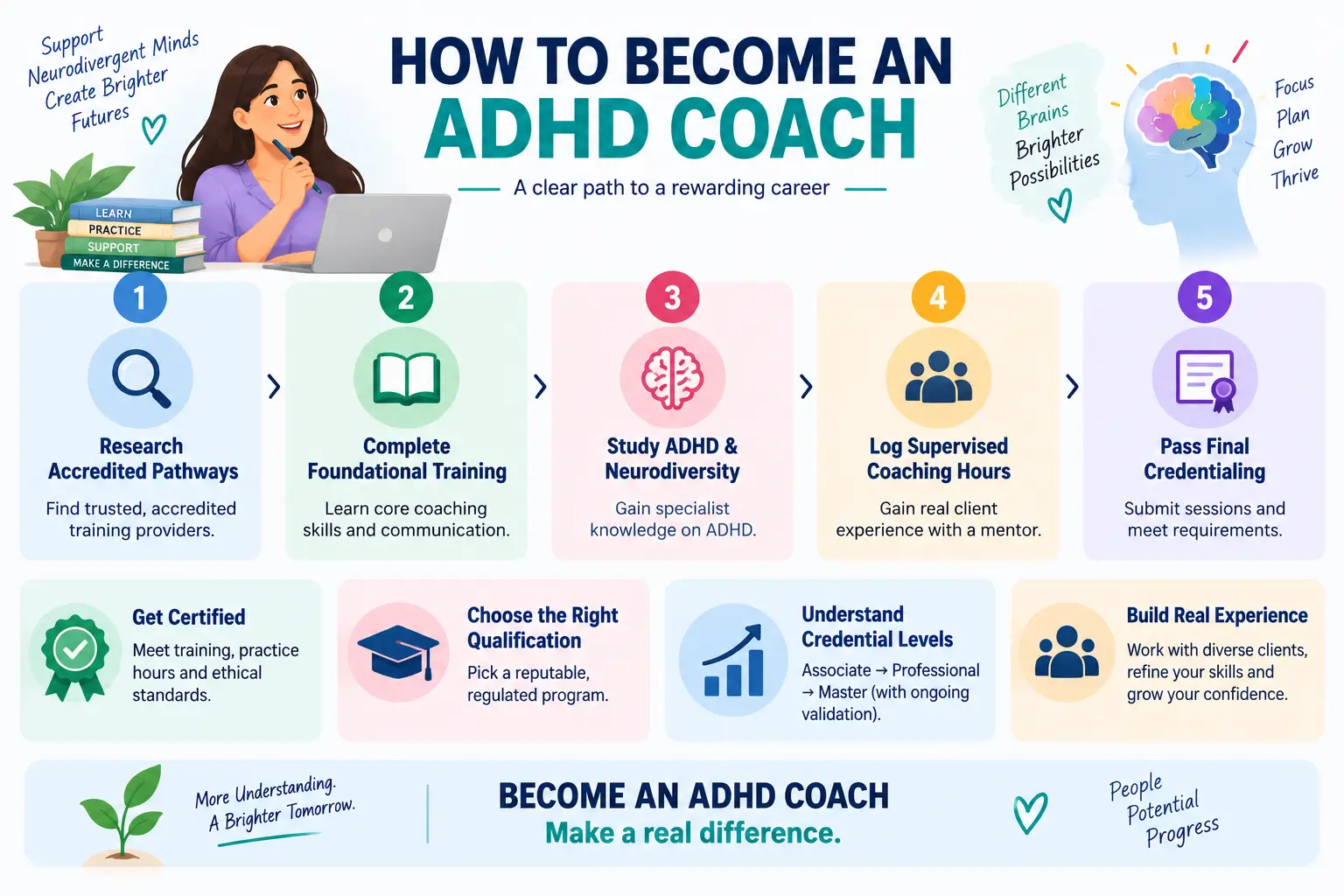
Becoming an ADHD coach requires a clear, methodical approach to ensure you build deep clinical safety and professional competence:
- Research Accredited Pathways: Locate training organizations certified by global coaching bodies.
- Complete Foundational Training: Study the core models of professional coaching and active communication.
- Complete Specialist Neurodiversity Modules: Learn the specific science of ADHD, executive dysfunction, and neurodivergent accommodations.
- Log Supervised Coaching Hours: Practice your skills with real clients under the direct observation of a mentor coach.
- Pass Final Credentialing Examinations: Submit recorded sessions for review to secure your professional title.
How to Become a Certified ADHD Coach
If you want to know how to become a certified adhd coach, focus your efforts on checking off the structural requirements laid out by major governing bodies. Certification means you have verified your theoretical understanding, completed a minimum number of practical coaching hours, and demonstrated safe, ethical practice.
Choosing the Right ADHD Coaching Qualification
The value of your adhd coaching qualification depends entirely on the market reputation of the issuing body. Avoid unregulated certificate mills that promise instant qualification over a single weekend. Look for robust programs that require live interactive training, peer-coaching assessments, and a clear focus on the practical application of neurodivergent strategies.
Understanding Credentialed ADHD Coach Pathways
Operating as a credentialed adhd coach signals to the public, corporate entities, and the NHS that you meet rigorous professional standards. Credentials are categorized by experience levels—such as Associate, Professional, or Master level—requiring continuous validation through real-world client logs and ongoing skills assessments.
Building Experience and Coaching Competencies
Developing your skills requires coaching a diverse range of clients under close supervision. This practical phase helps you refine your use of silence, learn how to ask powerful open-ended questions, and develop the ability to handle a client who becomes highly overwhelmed during a session.
ADHD Coach Training UK and Certification Options
ADHD Coach Training UK Programmes
When looking for adhd coach training uk options, look for courses that explicitly align with UK workplace access schemes, such as the Department for Work and Pensions (DWP) Access to Work program. This alignment ensures your coaching methods meet the compliance standards required for state-funded support.
Certified ADHD Coach Training Routes
Enrolling in certified adhd coach training ensures your education covers essential competencies, including ADHD neurobiology, systemic family dynamics, and workplace adjustments. These comprehensive tracks guide you from basic active listening concepts to advanced behavioral design.
ADHD Coach Certification Programs Explained
The top adhd coach certification programs follow a structured, multi-module system:
| Module Focus | Core Covered Competencies |
|---|---|
| Foundational Coaching | Active listening, powerful questioning, ethics, and clean communication. |
| ADHD Neurobiology | Dopamine mechanics, executive function profiles, and co-occurring presentations. |
| Applied Strategy | Time-management design, emotional regulation, and environmental modifications. |
| Practicum & Mentor Review | Supervised client work, recorded session analysis, and developmental feedback. |
Best ADHD Coach Training Providers
To find the best adhd coach training, prioritize schools recognized by leading global bodies like the ICF or PAAC. Reputable institutions include ADDCA (ADHD Coach Academy), the Coach Approach Association, and specific UK-based neurodiversity academies that offer clear pathways to global credentials.
Become an ADHD Coach Online Through Flexible Learning
The option to become an adhd coach online has made the profession highly accessible. Top-tier providers offer interactive digital classrooms, live Zoom practice rooms, and online community portals. This setup allows you to balance your studies with your current personal or professional commitments.
ADHD Life Coach Training Options
If your focus is supporting clients with daily routines, relationships, and personal habits, pursuing specialized adhd life coach training is an excellent choice. This pathway balances professional career planning with everyday lifestyle management, helping adults establish balanced, sustainable routines.
Cost of ADHD Coach Certification
The overall cost of adhd coach certification typically ranges from £2,500 to £7,000, depending on how far you advance through the training tiers. This investment generally covers your live interactive classes, individual mentor coaching sessions, evaluation materials, and final certification exam fees.
Professional Bodies and Industry Standards
International Coaching Federation (ICF) and Global Recognition
The international coaching federation icf is the gold standard for the global coaching industry. Holding an ICF credential ensures your qualifications are respected by corporate HR departments, educational institutions, and healthcare systems worldwide.
Professional Association of ADHD Coaches (PAAC)
The professional association of adhd coaches paac is the premier global body focused exclusively on the unique nuances of neurodiversity coaching. PAAC sets the benchmark for safe ethical frameworks, diagnostic boundaries, and specialist competencies required when working with neurodivergent individuals.
Benefits of an ICF Accredited Training Program
Choosing an icf accredited training program guarantees your education meets high quality and ethical standards. It simplifies your path to an individual credential, as your training hours are automatically recognized without needing an intensive external review of your course curriculum.
Ethical Standards and Professional Development
Maintaining high ethical standards is essential to protect your clients from harm. Coaches must clearly understand the limits of their role, maintain strict confidentiality, and know exactly when a client’s challenges require a referral to a licensed therapist or medical psychiatrist.
Continuing Education for ADHD Coaches
The science surrounding neurodiversity is constantly evolving. To keep your credentials active, you must complete regular continuing coach education (CCE) units. This ongoing learning keeps you informed about the latest peer-reviewed research, adaptive tools, and inclusive vocabulary.
Core Skills Required for Successful ADHD Coaching
Cognitive Behavioral Coaching Techniques
Coaches frequently use cognitive behavioral coaching methods to help clients identify and shift unhelpful thought loops. When a client experiences a blocker, coaches help them reframe negative core beliefs like “I am lazy” into objective, actionable perspectives focused on executive function support.
Client-Centered Goal Setting Methods
Traditional goal-setting models often fail neurodivergent individuals because they assume a linear path. Using client centered goal setting, coaches help individuals design highly customized, visual milestones that match their natural fluctuations in energy and focus.
Psychoeducation for ADHD and Client Empowerment
Providing clear psychoeducation for adhd is central to building self-advocacy. By explaining the underlying neurology of symptoms like dopamine deficiency or working memory limitations, coaches help clients separate their identity from their executive challenges, reducing shame and boosting confidence.
Developing Adult ADHD Coping Strategies
Coaches help individuals build an actionable toolkit of adult adhd coping strategies. These personalized systems help clients navigate daily demands with less friction:
[Incoming Task/Demand]
│
▼
[Deploy Body Double or Visual Timer]
│
▼
[Execute Task in High-Dopamine Sprint]
These strategies provide reliable structure, turning overwhelming obligations into manageable, predictable routines.
Supporting Workplace Adjustments for ADHD
Coaches help clients request formal workplace adjustments for adhd. This can include securing quiet workspaces, requesting written summaries of verbal meetings, or using specialized speech-to-text software to make daily corporate demands more accessible.
Academic Coaching for Neurodiversity
For students in school or university, academic coaching for neurodiversity focuses heavily on project breakdown, essay planning, and managing study environments. Coaches help students build sustainable revision routines that work with their focus cycles instead of fighting against them.
Executive Function Coach Training and Advanced Coaching Skills
Understanding Executive Function Challenges
Executive function challenges impact an individual’s ability to plan, organize, and execute tasks smoothly. A client may know exactly what they need to do, but face a significant neurological block when trying to initiate the first step.
Executive Function Coach Training Programmes
Investing in executive function coach training equips you with advanced tools to address specific cognitive bottlenecks. This specialized training focuses on step-by-step skill-building, working memory support, and emotional regulation techniques.
Helping Clients Improve Organisation and Productivity
Coaches help clients build external systems to organize their environments and routines. This involves setting up color-coded workspaces, streamlining digital task managers, and creating automated workflows that reduce the day-to-day cognitive load on the brain.
Strategies for Emotional Regulation and Self-Management
Managing emotional dysregulation is a key part of self-management. Coaches teach clients to recognize early signs of sensory overwhelm or frustration, allowing them to use grounding techniques or take proactive breaks before facing a complete executive burnout.
Accountability and Behaviour Change Techniques
Accountability in ADHD coaching is always supportive and free from judgment. Coaches use regular text check-ins, body-doubling sessions, and clear visual tracking systems to help clients stay connected to their goals without creating feelings of shame or guilt.
Starting an ADHD Coaching Practice or Business
How to Start an ADHD Coaching Business
If you want to know how to start an adhd coaching business, begin by registering your company name, securing professional liability insurance, and ensuring full GDPR compliance for client notes. Building a solid business infrastructure from day one ensures you can scale safely as your client list grows.
Choosing Between Private Practice and Employment
Take time to evaluate whether you prefer the autonomy of running a business or the stability of an employed role:
| Feature | Private Practice Pathway | Employed Corporate/Clinic Path |
|---|---|---|
| Income Potential | High (uncapped hourly fees) | Fixed (stable salary plus benefits) |
| Schedule Control | Complete (set your own hours) | Fixed (structured clinic or corporate hours) |
| Admin & Marketing | Full Responsibility (required) | Handled by Employer (provided) |
Building an Online ADHD Coaching Service
Operating an online coaching service allows you to work with clients across the globe. To ensure a seamless virtual experience, invest in a reliable tech stack, including HIPAA/GDPR-compliant video platform software, automated scheduling tools, and interactive digital whiteboards.
Marketing and Attracting ADHD Coaching Clients
To attract clients naturally, focus on creating educational content that resonates with the real-world experiences of neurodivergent individuals. Writing informative blog posts, hosting introductory webinars, and sharing practical tips on social media helps build trust and showcases your expertise.
Creating Coaching Packages and Programmes
Avoid selling standalone, one-off coaching sessions, as neurodivergent clients benefit most from sustained structure. Instead, bundle your services into comprehensive multi-week packages that include initial intake sessions, weekly video calls, and ongoing text-based accountability support.
ADHD Coach Jobs UK and Career Opportunities
ADHD Coach Jobs UK and Employment Trends
The market for adhd coach jobs uk is growing rapidly. Specialist clinics, universities, and neurodiversity-focused charities are actively recruiting certified coaches to handle their expanding client waitlists, offering both stable employment and contract-based positions.
Working as an Independent ADHD Coach
Practicing independently gives you the freedom to specialize in a specific niche, such as working exclusively with neurodivergent creatives, tech founders, or parents of ADHD children. It allows you to build a business that fully aligns with your personal values and lifestyle.
Opportunities Within Education and Workplace Support
UK universities and corporate companies are increasingly bringing ADHD coaches on board. Coaches assist students under Disabled Students’ Allowances (DSA) and support employees funded through the Access to Work scheme, ensuring individuals have the support needed to thrive in their environments.
Corporate and Executive ADHD Coaching Roles
High-earning individuals and corporate executives with ADHD often seek out specialized support to manage intense professional demands. Executive ADHD coaching focuses on complex project management, avoiding burnout, and developing inclusive communication strategies for leadership roles.
Expanding into Neurodiversity Consultancy
Experienced coaches frequently expand their services into corporate neurodiversity consultancy. In this role, you help companies update their HR policies, deliver neurodiversity awareness workshops, and design work environments that support all cognitive profiles.
ADHD Coach Salary UK and Income Potential
Average ADHD Coach Salary UK
The standard adhd coach salary uk varies significantly based on your experience level and business model. For those in salaried roles within universities or healthcare clinics, typical earnings range from £35,000 to £50,000 per year.
Factors That Influence Earnings
Your income potential is directly driven by your professional credentials, your specific niche, and your business model. Having an ICF credential and advanced executive function training allows you to position your services at a premium level in the market.
Income Potential for Independent ADHD Coaches
Independent coaches operating private practices typically charge between £75 and £150+ per hour. Practitioners who offer comprehensive monthly support packages easily generate stable incomes exceeding £60,000 to £90,000+ annually as their client base grows.
Scaling an ADHD Coaching Business
To grow your business beyond one-on-one sessions, consider launching small group coaching programs, designing self-paced digital courses, or bringing associate coaches into your practice to expand your capacity.
[One-on-One Private Coaching]
│
▼
[Group Coaching Programs]
│
▼
[Self-Paced Digital Courses]
This model allows you to scale your business income efficiently while making your support accessible to a wider audience.
Long-Term Career Growth Opportunities
The long-term outlook for this profession offers various rewarding pathways. You can transition into mentoring newer coaches, writing specialized books, leading neurodiversity research initiatives, or advising on national accessibility policies.
Building Credibility as an ADHD Coach
Developing Expertise in Neurodiversity Coaching
True credibility comes from a commitment to lifelong learning. Stay connected to current scientific research, participate in neurodiversity-affirming peer supervision groups, and continually refine your tools based on real-world client feedback.
Establishing Trust With Clients
Building trust with neurodivergent individuals requires creating an atmosphere completely free from shame. Be transparent about your coaching process, model healthy boundaries, and ensure your clients feel completely safe discussing their executive challenges.
Networking With ADHD Professionals and Communities
Build strong relationships with local psychiatrists, educational psychologists, and neurodiversity charities. Networking with the wider professional community creates a reliable referral network, ensuring clients can easily find your services when they transition out of clinical care.
Continuing Professional Development and Specialist Training
Consistently update your skillset by pursuing advanced training in related areas, such as sensory processing challenges, non-violent communication, or specialized career transition strategies for neurodivergent adults.
Becoming a Recognised ADHD Specialist Coach
By consistently delivering high-quality, evidence-backed support, you naturally establish yourself as a trusted voice in the neurodiversity field. This solid reputation leads to ongoing word-of-mouth referrals, speaking invitations, and opportunities to help shape the future of neurodivergent support.
Conclusion
Steps to Become an ADHD Coach and Build a Rewarding Career
Learning how to become an adhd coach gives you the tools to build a highly rewarding, impactful career. By moving step-by-step through an accredited training path, mastering executive function support, and gaining practical client experience, you turn your passion for helping others into a sustainable, professional practice.
Choosing the Right ADHD Coach Training and Certification Path
Take the time to select an icf accredited training program that matches your career goals and learning preferences. Investing in high-quality, comprehensive education ensures you enter the field with the practical skills, ethical foundation, and industry standing needed to support your clients effectively.
Future Opportunities in ADHD Coaching and Neurodiversity Support
The demand for qualified neurodiversity support continues to grow across workplaces, schools, and private spaces. Take the next step in your professional journey today—secure your training, build your expertise, and become a trusted specialist in this vital, expanding field.
FAQ - How to Become an ADHD Coach
To become an ADHD coach, choose a reputable training program accredited by the ICF or PAAC, complete the required educational hours, gain practical experience through supervised coaching sessions, and apply for your formal professional credential.
You become certified by completing an accredited training path that includes comprehensive instruction in ADHD neurobiology and coaching skills, logging a specified number of client hours, and passing a formal skills evaluation under an approved mentor.
The best training programs are those fully accredited by the ICF or PAAC, such as the ADDCA (ADHD Coach Academy) programs or university-aligned neurodiversity training tracks that offer live, interactive learning environments.
You do not need a traditional university degree, but you must hold a verified credential from an accredited coaching body (ICF/PAAC) alongside specialized training in ADHD neurobiology and executive dysfunction interventions.
Yes, you can practice without a formal university degree. The neurodiversity coaching sector prioritizes specialized training, practical skills, and lived experience over standard academic qualifications.
Comprehensive certification programs generally cost between £2,500 and £7,000, which typically covers live classes, mentor coaching hours, course materials, and final testing fees.
Yes, many top-tier international training schools offer comprehensive online programs, utilizing interactive virtual classrooms, digital practice spaces, and remote peer-coaching groups.
It is an advanced training path that focuses specifically on practical strategies to help clients improve cognitive skills like working memory, task initiation, organization, and emotional regulation.
Salaried coaches typically earn between £35,000 and £50,000 annually, while independent private practitioners can generate £60,000 to £90,000+ per year by charging premium hourly rates or offering comprehensive monthly packages.