

Introduction to a Career as a Classroom Assistant in the UK
Quick Answer
What Does a Classroom Assistant Do?
Understanding the Role of a Teaching Assistant and Classroom Support Worker
A school classroom assistant works directly under the guidance of a qualified class teacher to provide essential support for children with additional needs, manage day-to-day administrative burdens, and maintain focus within the room. In the UK workforce, terms like teaching assistant, learning support assistant, and classroom support worker are often used based on the specific focus of the role. A classroom support worker typically assists with general classroom management, while a learning support assistant frequently works with specific children who require structured academic or behavioral aid.
Key Teaching Assistant Responsibilities in UK Schools
The daily routine of an educational support worker changes rapidly depending on the age group and specific needs of the class. Key teaching assistant responsibilities include:
- Setting up the physical learning environment before pupils arrive.
- Implementing localized behavior management techniques to minimize classroom disruptions.
- Assisting the teacher with grading multiple-choice worksheets and documenting individual pupil progress.
- Providing direct pastoral care for students during break times and school excursions.
Supporting Teaching and Learning in Schools
The overarching mission of any teaching support staff member is supporting teaching and learning in schools. By taking charge of routine logistical matters, the assistant allows the primary teacher to focus purely on delivering core curriculum concepts. This collaborative effort directly boosts overall student engagement and improves the quality of education delivered across the institution.
One-to-One Student Support and Small Group Learning Interventions
A critical part of the role involves executing targeted small group learning interventions. For example, if a cluster of pupils is struggling with a specific mathematical concept, the assistant will pull those individuals into a quiet workspace to deliver tailored numeracy support. Additionally, assistants frequently provide dedicated one-to-one student support for children who have localized learning gaps or minor developmental delays.
Why Become a Classroom Assistant?
The Growing Demand for Teaching Support Staff in the UK School Workforce
The demand for qualified teaching support staff jobs across the UK school workforce has risen consistently over recent years. Maintained schools, free schools, and academies increasingly rely on learning intervention support specialists to manage larger class sizes and support growing pupil numbers. This means that individuals looking for stable, long-term employment will find a resilient job market with ongoing local vacancies.
Education Sector Careers and Long-Term Progression Opportunities
Entering the classroom environment as an assistant opens up diverse long-term education sector careers. This position serves as an exceptional proving ground. Many individuals use their experience as a direct springboard to transition into higher-level positions, specialized school administration support, speech and language therapy, or even formal university pathways to achieve full qualified teacher status (QTS).
The Rewards of Supporting Pupil Safety and Well-Being
Beyond the professional benefits, an educational assistant career provides immense intrinsic rewards. Watching a child master a skill they previously struggled with offers an unmatched level of professional satisfaction. You are positioned at the frontline of pupil safety and well-being, directly ensuring that vulnerable or anxious children feel protected, valued, and capable of succeeding within the school system.
Working in Primary and Secondary Education Support Roles
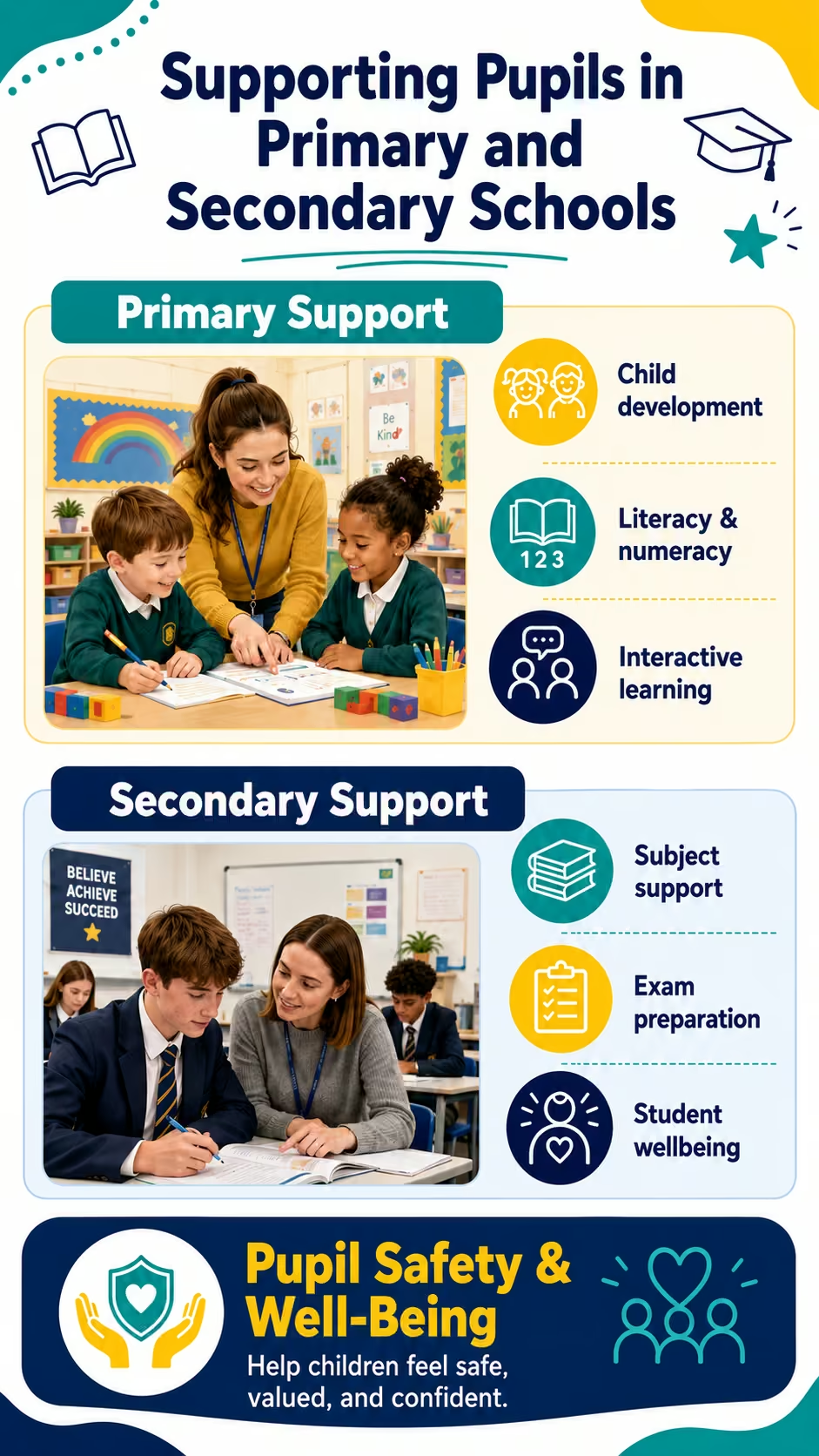
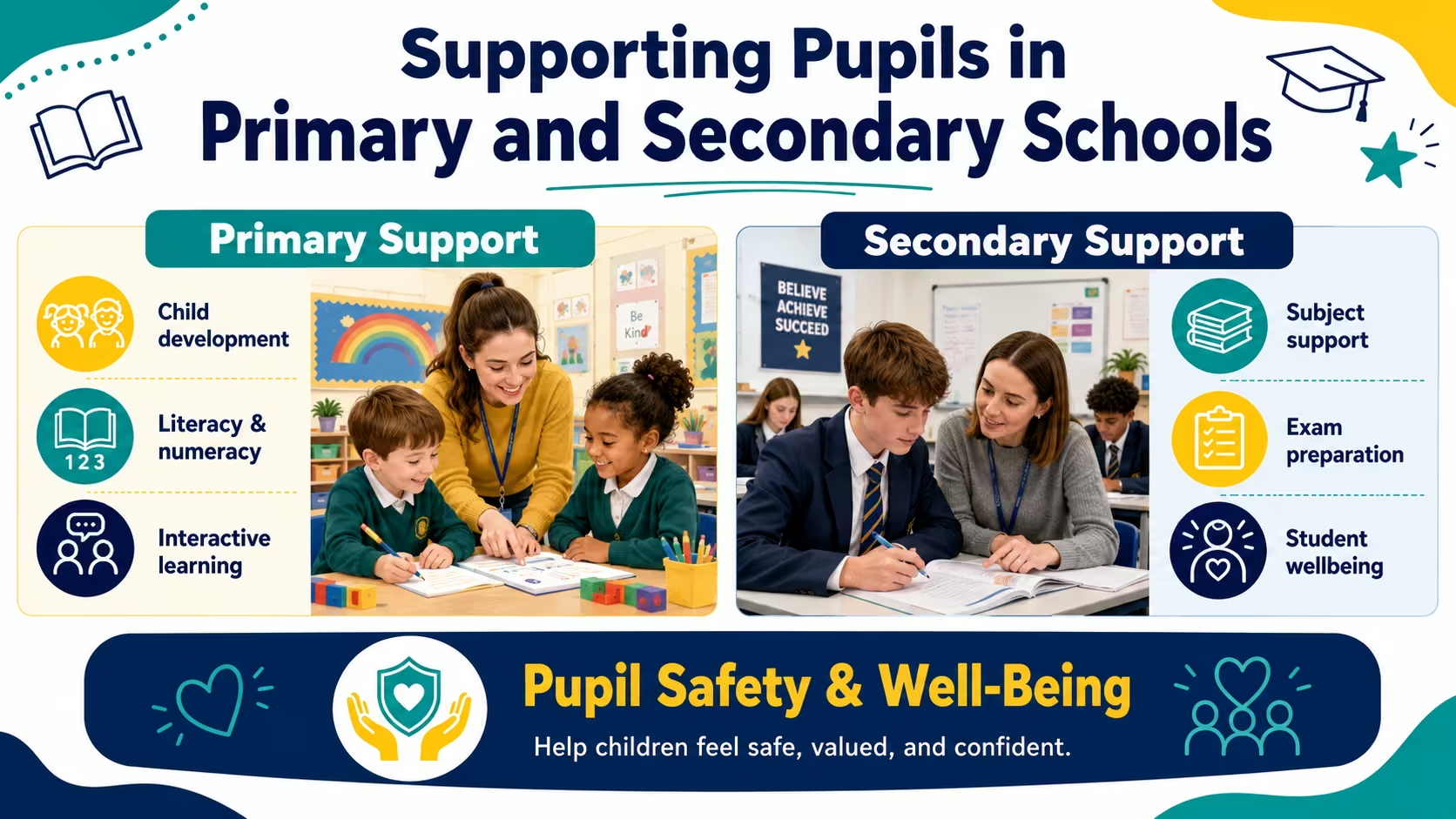
Aspiring professionals have the unique flexibility to choose between primary education support or secondary education support. Primary support roles focus heavily on foundational child development, basic literacy, and interactive play. Secondary roles, conversely, focus more on subject-specific support, helping teenagers navigate complex exam preparation, and providing sophisticated student wellbeing support during transitional adolescent years.
Teaching Assistant Entry Requirements UK
Classroom Assistant Qualifications and Essential Skills
When reviewing the baseline teaching assistant entry requirements uk, you will find that schools have the flexibility to set their own criteria. While some schools will hire staff with zero formal certifications if they demonstrate an exceptional natural aptitude, possessing recognized classroom assistant qualifications gives you an immediate competitive advantage over other applicants during the shortlisting phase.
Basic Literacy and Numeracy Skills Requirements
At an absolute minimum, you must prove that you possess strong basic literacy and numeracy skills. This is typically demonstrated by holding GCSEs in English and Mathematics at grade 4/C or above (or an equivalent Functional Skills Level 2 certification). You must be completely confident in your own literacy and numeracy support capabilities, as you will be expected to explain these fundamental academic concepts clearly to young learners.
Communication and Professional Relationships in Schools
A successful assistant must maintain flawless communication and professional relationships in schools. On any given day, you will act as a vital bridge between various stakeholders. This requires specialized communication skills for teaching assistants to deliver accurate feedback to teachers, explain instructions accessibly to pupils, and speak empathetically with parents during drop-off and pick-up windows.
Disclosure and Barring Service (DBS) Check Requirements
Because this career involves regular, unsupervised contact with minors, passing an Enhanced Disclosure and Barring Service (DBS) check is a strict legal mandate. A school cannot allow you to step onto the premises without this cleared document. This background check verifies your criminal record history to ensure absolute safety for the school community.
Safeguarding in Education Regulations and School Policies
Every support staff member must fully understand and comply with national safeguarding in education regulations. You will be explicitly trained in recognizing the signs of physical, emotional, or psychological neglect. You must adhere perfectly to strict internal school policies regarding child protection, knowing exactly how to document concerns and escalate them to the designated safeguarding lead (DSL) without delay.
How to Become a Classroom Assistant with No Qualifications
Can You Become a Teaching Assistant with No Experience?
It is entirely possible to discover how to become a teaching assistant with no experience or formal background in education. Many schools prioritize personal attributes—such as patience, resilience, empathy, and clear communication—over an expensive stack of certificates. If you can prove you possess the raw capability to handle a busy classroom environment, schools are often highly willing to support your training on the job.
School-Based Volunteer Experience and Work Placements
If your CV lacks formal professional exposure, the most effective strategy is to secure local school-based volunteer experience. Reach out directly to headteachers in your area and offer to volunteer for a few mornings a week to assist with reading programs or lunchtime supervision. This hands-on work placement experience proves your genuine commitment and gives you a realistic understanding of the current UK school workforce dynamics.
Entry Level Primary School Assistant Roles
Many individuals start their journey by targeting specific entry level primary school assistant roles. These baseline positions frequently involve assisting with reception or early years classes, where character traits like patience and high energy are valued more than advanced theoretical knowledge. These roles serve as the perfect entry point to earn a steady wage while discovering the inner workings of the local educational system.
Building Classroom Assistance Skills Before Employment
Before you start sending out formal applications, you can proactively develop valuable classroom assistance skills through self-directed means. Consider taking short, introductory child safety seminars online, reading up on modern pupil engagement strategies, or volunteering with local youth organizations, scout groups, or Sunday schools to build confidence in handling groups of children.
Essential Skills Every Classroom Assistant Needs
Classroom Management and Behaviour Management Techniques
To thrive in this role, you must develop a robust toolkit of classroom management and behaviour management techniques. Children will naturally test boundaries, and a skilled assistant knows how to de-escalate minor disruptions quietly without interrupting the flow of the main lesson.
Useful behavior intervention steps include:
- Proximity Control: Moving closer to a disruptive pupil to subtly signal awareness.
- Positive Reinforcement: Openly praising pupils who are displaying focused, compliant behavior.
- Non-Verbal Cues: Using simple, pre-established hand signals to redirect off-task students.
Supporting Children with Additional Needs and Inclusive Education
A progressive school system relies on inclusive education, which guarantees that children with diverse learning profiles are educated alongside their peers. You will be tasked with supporting children with additional needs, which means adjusting curriculum materials to make them accessible. This might involve breaking a complex multi-step writing assignment down into small, digestible bullet points or using visual aids for a child with auditory processing differences.
Pupil Engagement Strategies and Learning Intervention Support
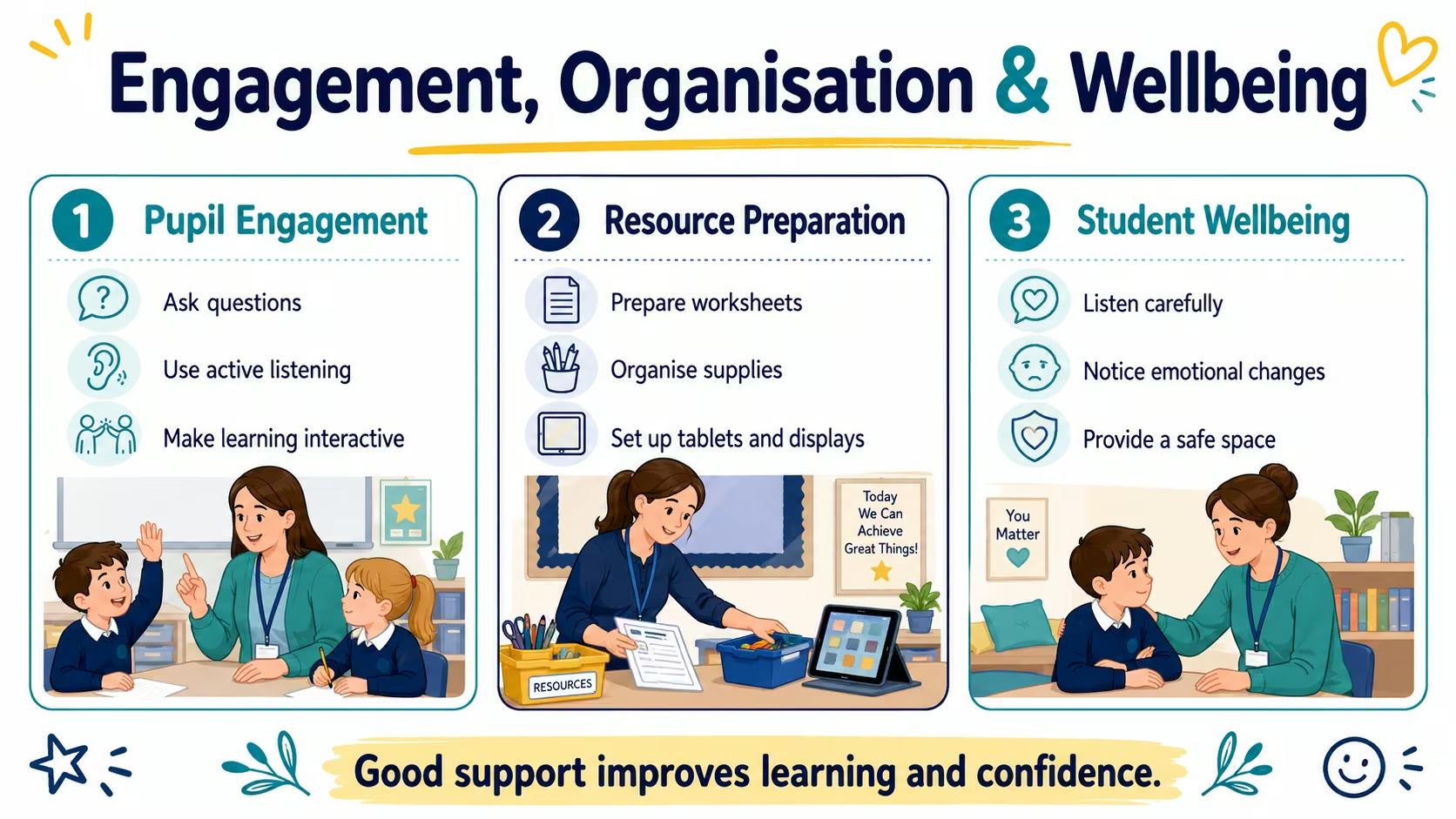
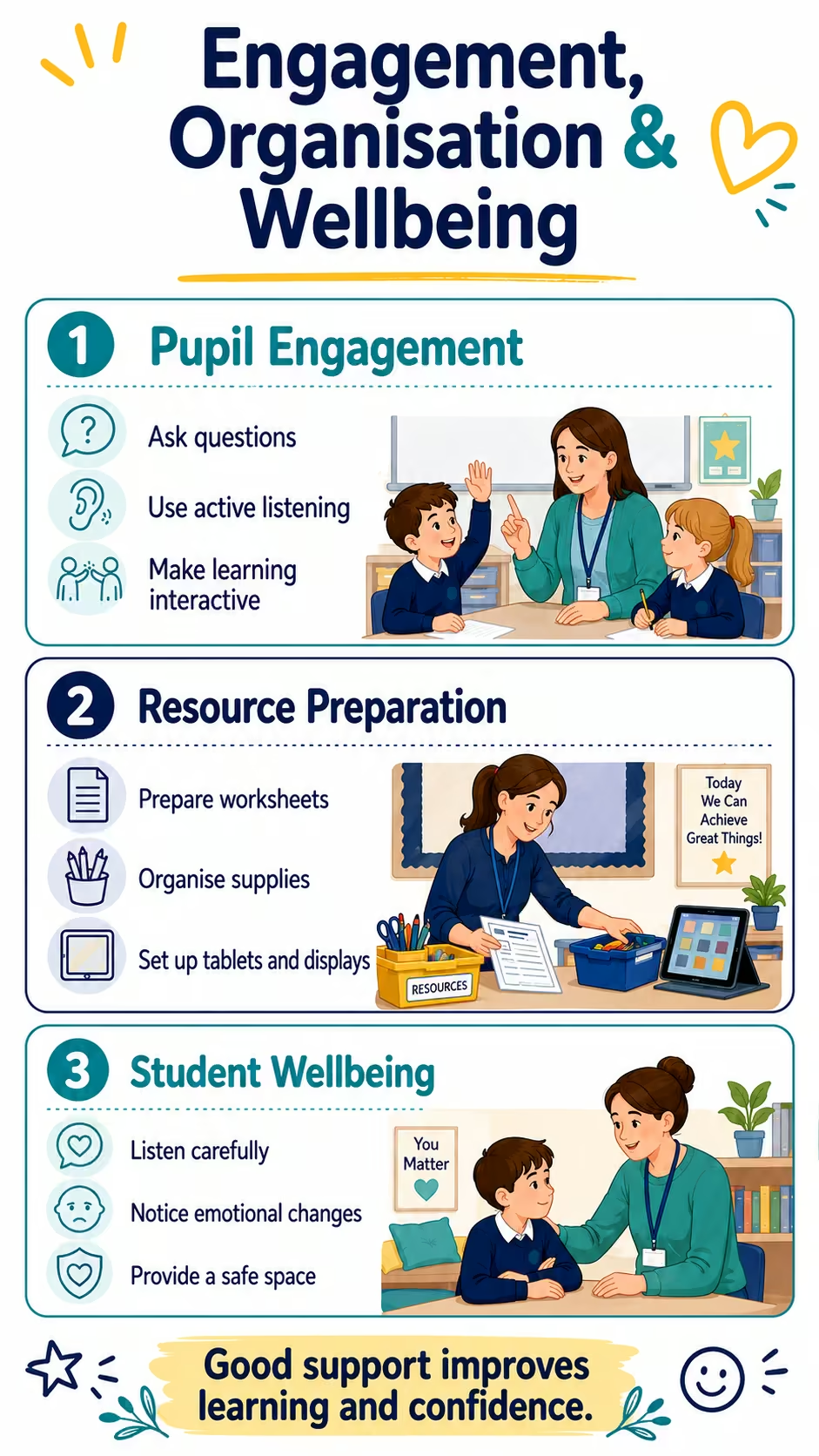
Maintaining focus across a diverse classroom requires dynamic pupil engagement strategies. Assistants must know how to keep easily distracted children on task through active listening, targeted questioning, and encouragement. When running a learning intervention support session, you must make the topic interactive, using physical counters for math or gamified flashcards for reading to keep engagement levels high.
Classroom Resource Preparation and Organisation Skills
A massive chunk of your practical efficiency boils down to classroom resource preparation and sharp organizational skills. Teachers frequently rely on assistants to photocopy worksheets, organize art supplies, calibrate classroom tablets, and manage physical displays. Having these resources completely prepped and accounted for before the lesson starts prevents wasted learning time.
Student Wellbeing Support and Pastoral Care for Students
Academic support is only one half of the equation; providing student wellbeing support and dedicated pastoral care for students is equally vital. Children frequently bring outside anxieties, social stresses, or family worries into the school environment. A competent assistant provides a safe, non-judgmental space for pupils to express themselves, monitoring emotional shifts and ensuring that child development milestones are being met healthily.
Teaching Assistant Training Courses UK
Choosing the Right Teaching Assistant Course UK
If you decide to pursue a formal qualification to boost your employment prospects, navigating the array of teaching assistant training courses uk can feel overwhelming. The key is to ensure that any course you select is fully accredited and listed under the Regulated Qualifications Framework (RQF) in England, Wales, and Northern Ireland. Unaccredited courses are rarely recognized by local authorities during the hiring process.Level 2 Teaching Assistant Course Explained
The level 2 teaching assistant course is the perfect starting point for complete beginners. This qualification focuses heavily on the fundamental mechanics of a school environment, basic child protection rules, and how to support a teacher during a standard lesson. It is highly suited for individuals who want to secure their very first operational role as a classroom support worker.Level 3 Teaching Assistant Diploma Online and RQF Qualifications
For those looking to secure higher pay or work with greater independence, completing a level 3 teaching assistant course is highly recommended. Enrolling in a level 3 teaching assistant diploma online allows you to study advanced topics—such as speech development, specialized assessment strategies, and independent learning support frameworks—all while maintaining your current personal or family schedules.NCFE CACHE Level 3 Qualification Benefits
When reviewing specific course providers, look for an NCFE CACHE level 3 qualification. CACHE (Council for Awards in Care, Health and Education) is the gold standard gold-recognized brand name within the UK education sector. Headteachers universally trust CACHE qualifications because they guarantee the candidate has undergone rigorous, externally verified training regarding child development and educational support services.Online Teaching Assistant Course vs Classroom-Based Learning
Choosing between an online teaching assistant course and traditional classroom-based training depends on your learning style and lifestyle constraints.| Learning Format | Key Advantages | Potential Drawbacks |
|---|---|---|
| Online Course |
✔ High flexibility ✔ Self-paced learning ✔ Easier to balance with childcare or existing jobs |
✖ Requires strong self-discipline ✖ Limited immediate support ✖ Less face-to-face interaction with peers |
| Classroom-Based |
✔ Structured timetable ✔ Face-to-face tutor support ✔ Immediate feedback ✔ Better networking opportunities |
✖ Fixed schedule ✖ Commuting costs ✖ Harder to balance with employment |
Continuous Professional Development (CPD) for Teaching Assistants
Education is an evolving field, meaning your training should never truly stop. Engaging in continuous professional development (CPD) ensures your skills remain entirely modern. Short CPD courses focusing on specific modern topics—such as autism awareness, childhood anxiety management, or digital learning tools—will make your professional CV look exceptionally attractive to prospective employers.
Becoming a Certified Teaching Assistant
Teaching Assistant Certification Options
Achieving an official teaching assistant certification serves as undeniable proof of your technical capabilities. Whether you choose to hold an RQF Level 2 Certificate or a comprehensive Level 3 Diploma, having that physical certificate allows you to apply confidently for formal, permanent vacancies within both state-maintained schools and private independent academies.
Classroom Assistant Apprenticeship Opportunities
If you want to earn a steady wage while gaining your credentials completely debt-free, look into a classroom assistant apprenticeship. These government-backed programs pair you directly with a local employing school. You will typically spend four days a week working directly inside the classroom gaining real-world experience, and one day a week completing your theoretical portfolio studies with a training provider.
Higher Level Teaching Assistant Qualification and HLTA Status
The pinnacle of progression within this support field is achieving higher level teaching assistant (HLTA) status. To qualify for a higher level teaching assistant qualification, you must already possess significant classroom experience and demonstrate the capacity to lead full classes. HLTAs frequently step in to cover a class when the primary teacher is away sick or undertaking planning sessions, taking on advanced planning and resource management duties.
How Long Does It Take to Become a TA?
The timeline for how long does it take to become a ta varies significantly based on your entry method:
- Direct Entry (Unqualified): 1 to 3 months to pass interviews and secure a cleared DBS check.
- Level 2 / Level 3 Course: 6 to 12 months of dedicated part-time or online study.
- Apprenticeship Route: Typically 12 to 18 months of integrated work and study.
SEN Teaching Assistant Career Path
Understanding Special Educational Needs (SEN) Support
Specializing in special educational needs (SEN) support is one of the most in-demand routes within the entire UK education sector. An SEN teaching assistant works closely with children who possess diverse physical, cognitive, or behavioral challenges. This specialized field requires a deep level of patience, extreme emotional resilience, and an adaptive approach to daily learning environments.
Supporting Children with Additional Needs in Schools
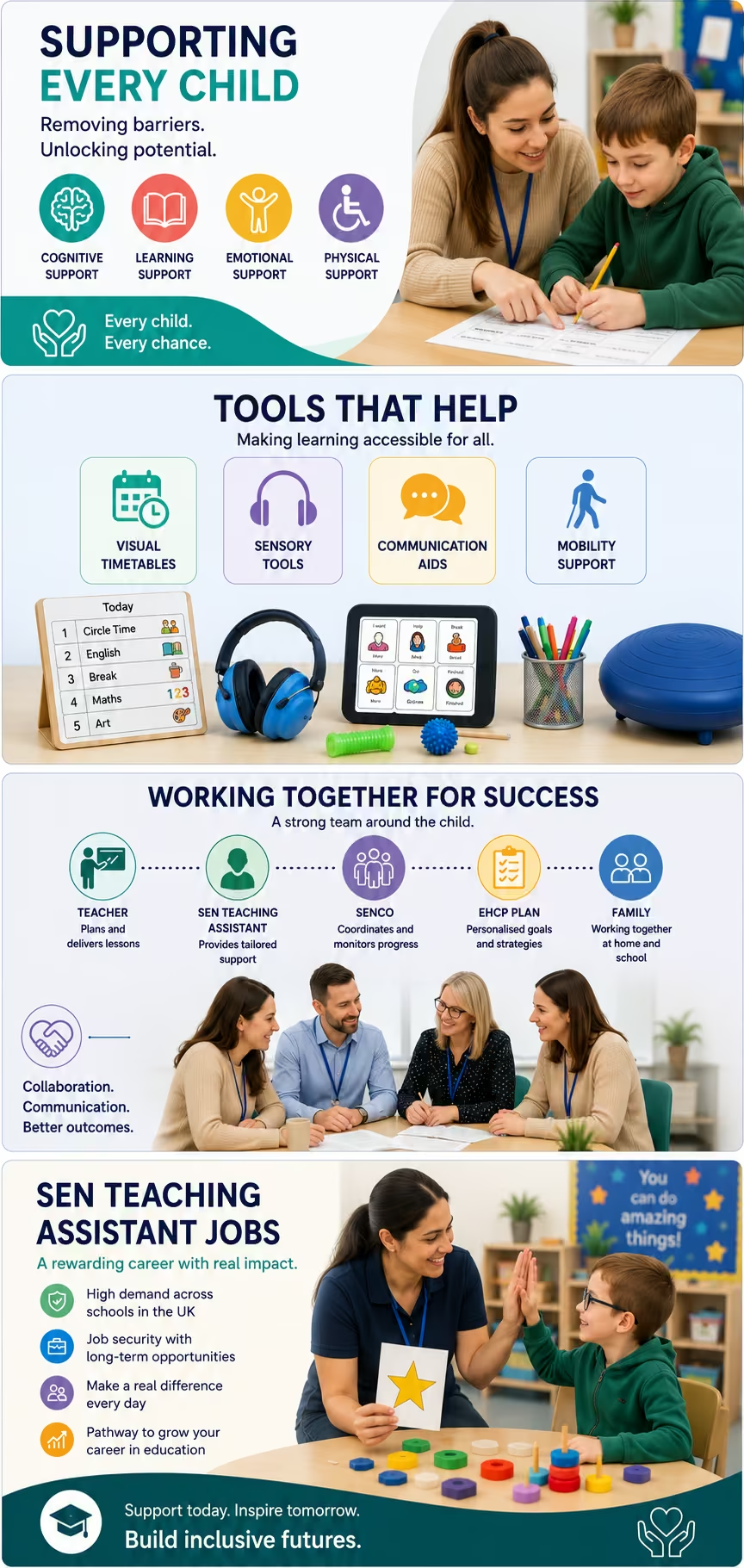
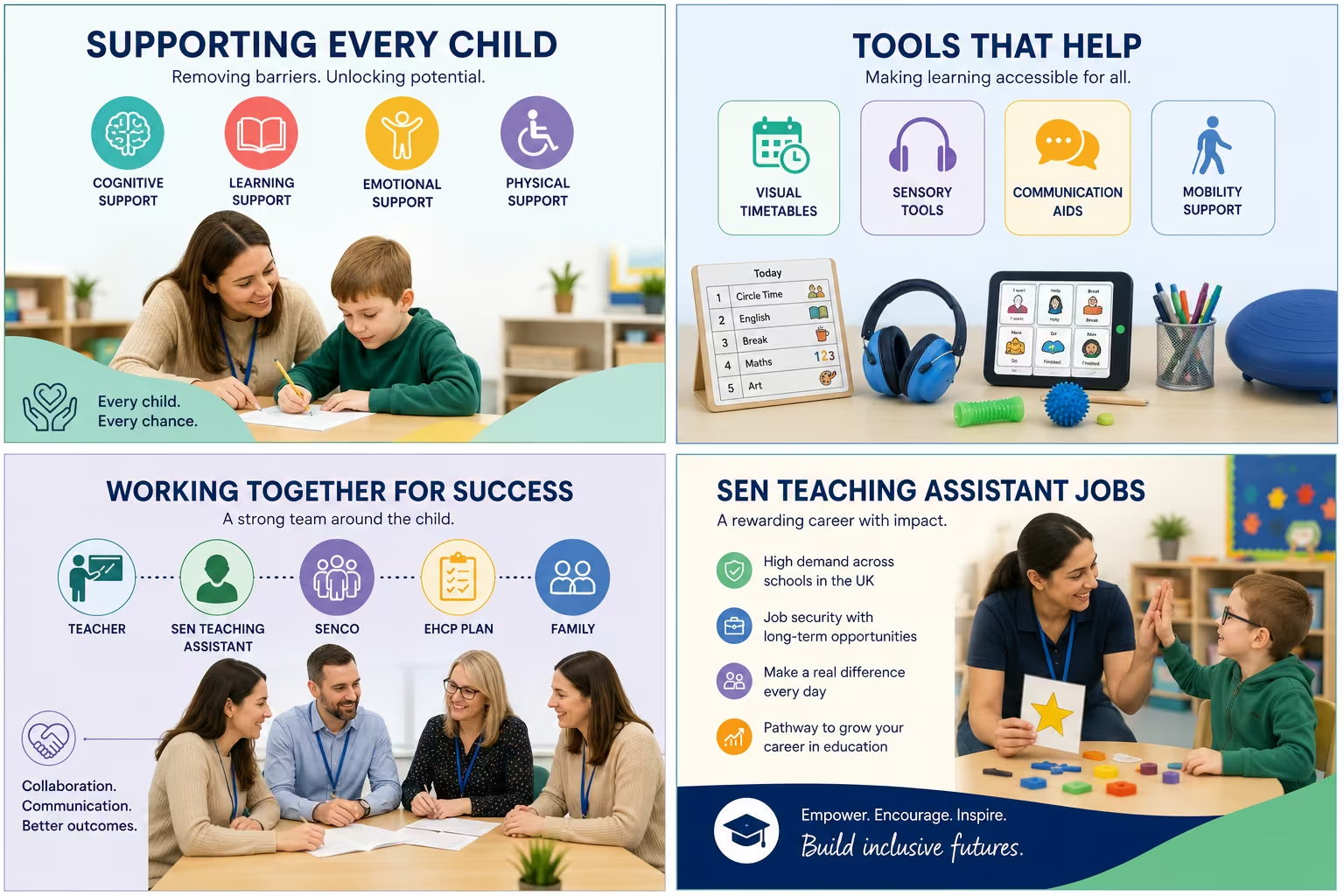
When working in SEN teaching assistant jobs, your primary mission is to break down complex barriers to learning. You might be supporting a child with severe dyslexia, assisting a pupil on the autism spectrum, or providing physical accommodation for a student with mobility challenges. You will work closely with the school’s Special Educational Needs Coordinator (SENCO) to implement customized Education, Health and Care Plans (EHCPs).
Inclusive Classroom Practices for SEN Learners
Successful SEN support relies on embedding inclusive classroom practices into daily routines. Rather than isolating the child away from their peers, you will use specialized tools to help them participate fully in the standard lesson. This might involve using visual timetables, implementing sensory breaks, or providing alternative communication tools to maximize pupil engagement.
SEN Teaching Assistant Jobs and Career Opportunities
Because the diagnostic rates for additional needs continue to rise across the UK, SEN teaching assistant jobs are widely available and offer excellent job security. These roles are frequently funded directly through dedicated local authority education jobs allocations, meaning schools are constantly scouting for committed individuals to provide this crucial one-to-one or small group care.
Primary School vs Secondary School Teaching Assistant Roles
Primary School Teaching Assistant Responsibilities
Working as a primary school teaching assistant requires an adaptable, highly nurturing approach to education. You will be helping young children adjust to social structures, learn basic motor skills, and master foundational reading and math concepts. Your day will be highly active, involving everything from setting up messy art projects to supervising playground games.
Early Years Foundation Stage (EYFS) Support
If you are placed in a Nursery or Reception class, you will be operating under the Early Years Foundation Stage (EYFS) framework. Here, your role focuses heavily on child development through structured play. You will document observations of how children interact, manage basic physical hygiene routines, and foster basic language acquisition skills in a highly energetic environment.
Secondary School Teaching Assistant Criteria
To secure a role under the secondary school teaching assistant criteria, the expectations shift toward academic subject competence and sophisticated behavioral management. You must feel entirely confident helping teenagers grasp secondary-level concepts in subjects like English, Science, or History. The focus is on fostering independent study habits and providing pastoral care during stressful exam cycles.
Differences Between Primary and Secondary Education Support
The fundamental contrast between these primary education support and secondary education support pathways comes down to emotional delivery vs. subject guidance. Primary roles require a high degree of nurturing care and creative play facilitation. Secondary roles demand high emotional intelligence to handle complex teenage social dynamics, paired with the academic confidence to explain more advanced curriculum materials.
How to Get a School Placement UK
Finding School-Based Learning Support Opportunities
If you are currently enrolled in an online course or looking to build a competitive CV, discovering how to get a school placement uk is an essential step. A school-based learning support placement gives you the physical arena to practice your theoretical knowledge and gather the practical work references required by future employers.
Building Experience Through Volunteering and Placements
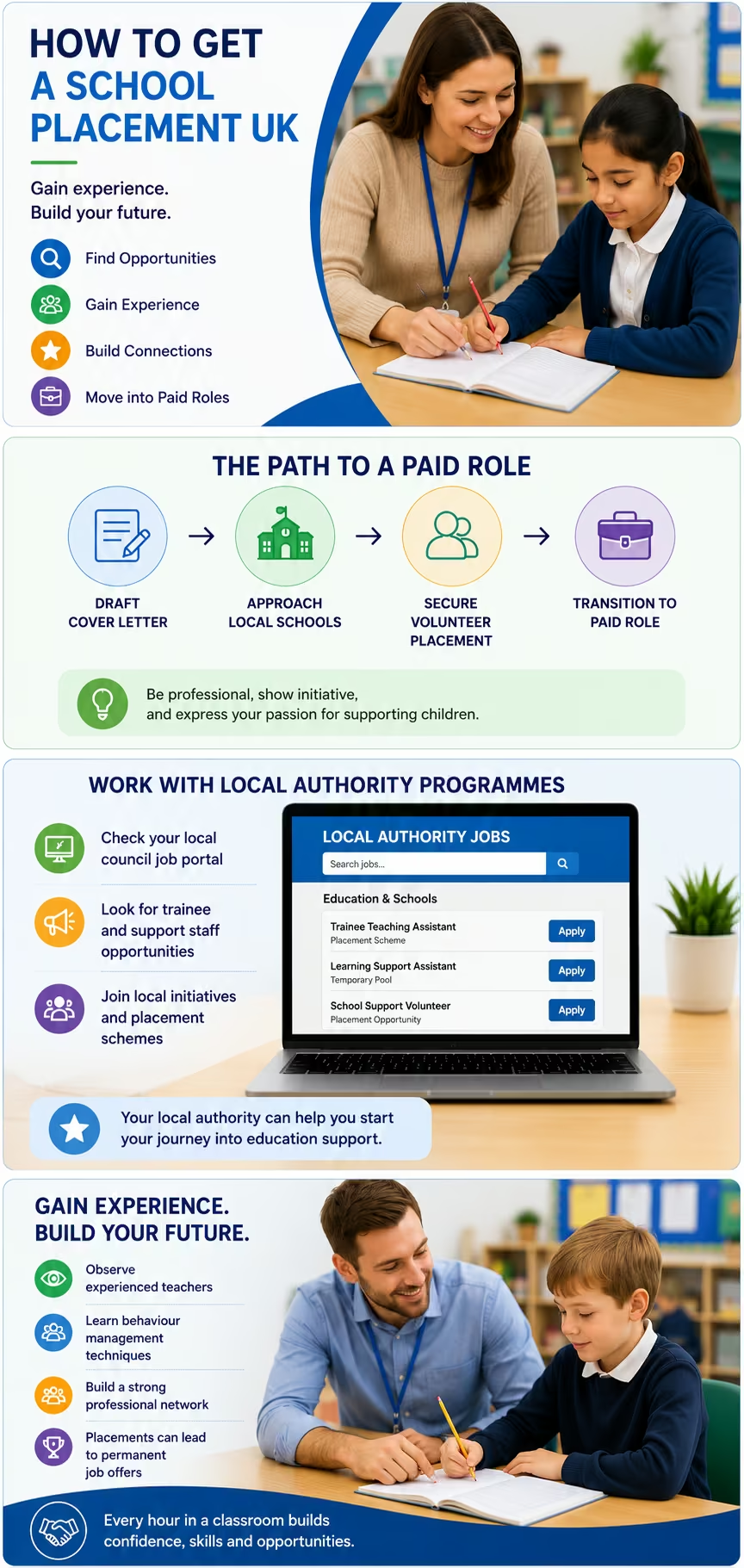
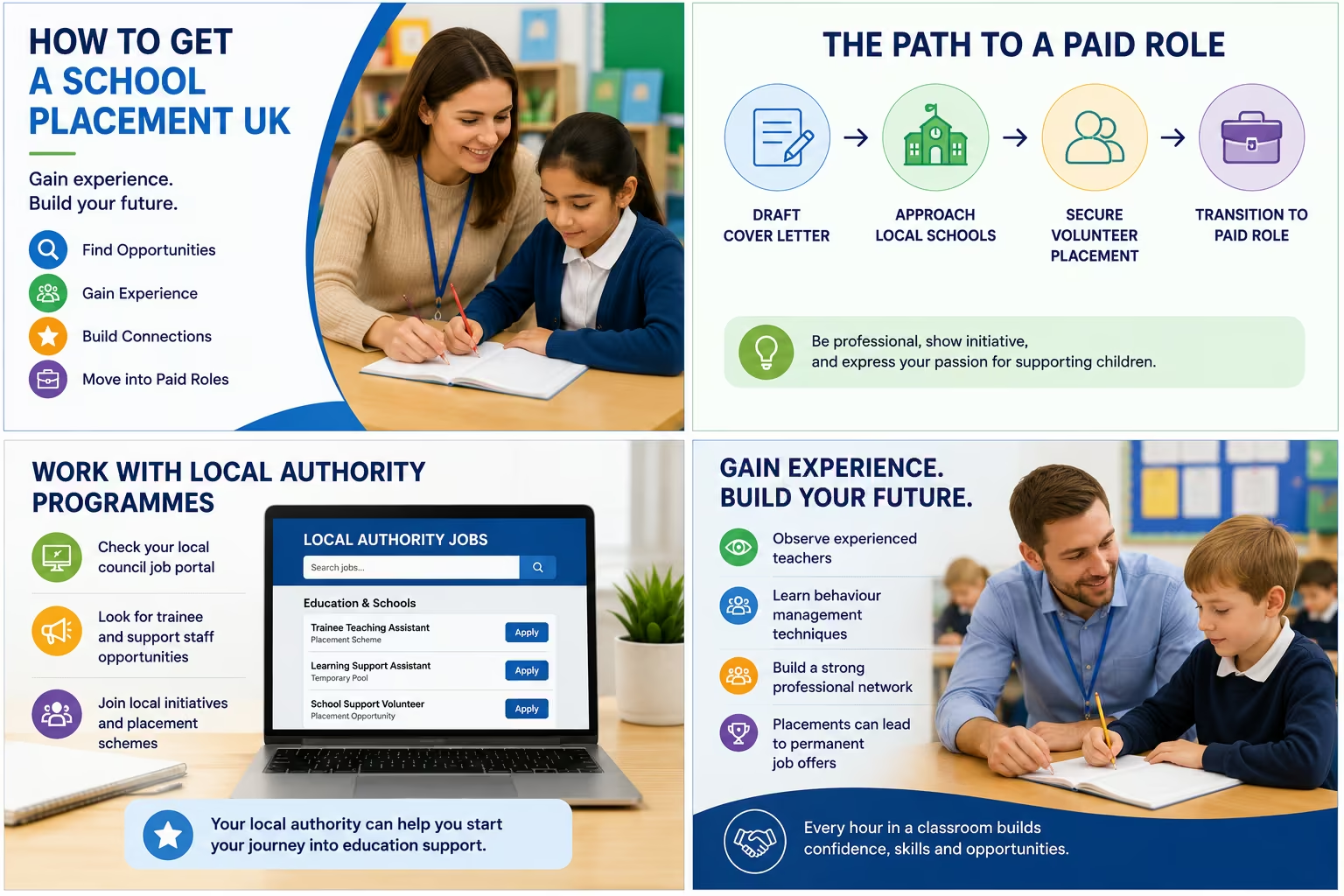
To secure a placement, treat the process with absolute professionalism. Draft a clean, well-spoken cover letter detailing your career goals, your current training status, and your cleared DBS status if you already possess one.
[Draft Cover Letter] ──> [Approach Local Schools] ──> [Secure Volunteer Placement] ──> [Transition to Paid Role]
Personally visit or email local schools, specifically addressing the headteacher or the deputy head in charge of support staff resources to express your interest in volunteering.
Working with Local Authority Education Jobs Programmes
Many local councils run specific recruitment drives or back-to-work initiatives aimed at funneling local talent into education support worker roles. Regularly monitor your local authority’s official job portal. They frequently list specialized trainee placement tracks or temporary support staff pools designed specifically to help local residents break into the educational workforce.
Gaining Practical Experience for Future Employment
Every hour spent inside a real classroom builds your confidence and marketability. Use your placement time to observe experienced teachers, learn how different behavior management techniques work in practice, and build a strong professional network. A significant percentage of volunteer placements turn directly into permanent, paid job offers when internal vacancies arise.
Classroom Assistant Salary UK and Career Progression
Average Wage of a Teaching Assistant UK
When analyzing the financial landscape of this career, you must understand how educational pay structures operate. The classroom assistant salary uk is typically governed by the National Joint Council (NJC) pay scale for local government support staff. The average wage of a teaching assistant uk for a standard full-time equivalent (FTE) role typically sits between £23,000 and £27,500 per year, depending on your experience and qualification level.
Factors That Influence Classroom Assistant Salary UK
It is absolutely vital to realize that because most assistants are on term-time-only contracts, your actual take-home salary is calculated on a pro-rata basis. This means you are paid specifically for the 39 weeks the school is open, plus statutory holiday allowance, with the total sum divided into 12 equal monthly installments to ensure financial stability.
Other massive factors impacting your pay include:
- Regional Weighting: Roles inside Inner London offer substantial cost-of-living adjustments, with starting FTE scales often exceeding £28,000.
- Hours Worked: Many roles are part time classroom assistant jobs, meaning your take-home pay matches the exact hours completed.
- Specialised Allowances: Working 1:1 with complex SEN pupils often triggers an additional internal school pay allowance.
Standard Teaching Assistant Career Path
The standard teaching assistant career path offers a clear, predictable trajectory for professional upward mobility as you accumulate experience and formal qualifications.
[Level 1 / General Assistant] ──> [Level 2 / 3 Qualified TA] ──> [Specialist / SEN TA] ──> [HLTA Status]
Progressing to Higher Level Teaching Assistant Roles
By stepping up from a standard assistant to a Higher Level Teaching Assistant (HLTA) position, your earning potential increases significantly. HLTAs assume far greater operational responsibilities and are placed on higher NJC pay bands, typically earning an FTE salary between £28,000 and £32,000, reflecting their ability to lead classrooms independently.
Future Opportunities in Educational Support Services
Your career progression doesn’t have to stop at HLTA status. The deep structural knowledge gained on the school floor qualifies you for numerous advanced avenues within broader educational support services. You can easily leverage your background to transition into becoming a behavior specialist, a school family liaison officer, an educational consultant, or step into specialized university tracks to train as an educational psychologist.
Finding Classroom Assistant Jobs in the UK
How to Apply for Teaching Assistant Jobs Successfully
Learning how to apply for teaching assistant jobs successfully requires showcasing your practical capability and your understanding of student safety. When filling out school application forms, avoid vague descriptions. Instead, use highly specific examples of how you have supported children, handled difficult behavior, or organized learning materials in past environments.
Classroom Assistant Jobs Near Me and Local Opportunities
When hunting for active classroom assistant jobs near me, start your search locally by checking the individual websites of schools within a commutable radius. Many schools post vacancies directly on their own “Vacancies” portals before paying to list them on external commercial job boards.
School Support Worker Vacancies UK
To cast a wider net across the country, utilize official government recruitment channels. The official UK Government “Teaching Vacancies” service is an invaluable, free tool that aggregates thousands of verified school support worker vacancies uk across primary, secondary, and special schools daily.
Part Time Classroom Assistant Jobs and Flexible Working Options
One of the most attractive aspects of this profession is the sheer abundance of part time classroom assistant jobs. This structure makes the career exceptionally popular for parents with school-aged children, university students, or individuals balancing secondary careers, as your working hours naturally align with standard school drop-off times and holiday periods.
Teaching Assistant Jobs UK Application Tips
To maximize your chances of securing an interview for competitive teaching assistant jobs uk, ensure you follow these professional steps:
- Tailor Your Personal Statement: Explicitly reference the school’s specific values and latest Ofsted report findings.
- Highlight Safeguarding Awareness: Ensure your knowledge of child protection regulations is positioned prominently on page one of your application.
- Secure Solid References: Provide trustworthy professional or character references who can vouch directly for your integrity, patience, and reliability around children.
Taking the First Step Towards a Successful Classroom Assistant Career in the UK
Embarking on a journey to discover how to become a classroom assistant in the uk is an open door to a highly fulfilling, stable, and deeply impactful profession. By understanding the core entry requirements, focusing on essential child development skills, and choosing the training pathway that perfectly matches your lifestyle, you can easily position yourself as a highly valued asset within the UK school workforce. The education sector will always have a vital, resonant need for empathetic and driven support staff. Take that definitive first step toward your new career today by researching local volunteering opportunities or enrolling in an accredited training course, and start making a genuine difference in the lives of the next generation.
FAQ - how to become a classroom assistant in the uk
To become a classroom assistant in the UK, you must secure an Enhanced DBS check and demonstrate strong basic literacy and numeracy skills. You can enter the field directly by applying for entry-level unqualified roles, or boost your employment prospects by completing an accredited RQF Level 2 or Level 3 training course while volunteering locally to build a solid CV.
There are no rigid statutory qualifications required to start, but most UK schools expect a minimum of GCSE English and Maths at grade C/4 or equivalent. Holding an accredited NCFE CACHE Level 2 or Level 3 qualification in Supporting Teaching and Learning in Schools will significantly improve your chances of securing a permanent role.
If you apply directly for entry-level unqualified positions, it can take just a few weeks to pass interviews and clear your mandatory DBS check. If you choose to study for an official Level 2 or Level 3 RQF diploma online, the training typically takes between 6 to 12 months of part-time study.
Yes, passing an Enhanced Disclosure and Barring Service (DBS) check is a strict legal requirement for anyone working in a UK school. This check ensures you have no criminal convictions or restrictions that would prevent you from working safely alongside children and vulnerable young people.
The average full-time equivalent (FTE) salary ranges between £23,000 and £27,500 per year. However, because most assistants work on term-time-only contracts (39 weeks per year), the actual pro-rata take-home pay typically sits between £13,000 and £21,000 annually, depending on hours, location, and experience.
In most modern UK schools, the terms are used interchangeably. However, a classroom assistant or support worker often focuses more on general classroom organization, resource preparation, and behavioral management, whereas a teaching assistant frequently focuses on direct academic intervention, working 1:1 or with small groups.
A Higher Level Teaching Assistant (HLTA) is an experienced support professional who has achieved advanced status. HLTAs take on significantly more responsibility, which includes planning learning resources, monitoring student progress, and leading full classes independently when a qualified teacher is absent.
Yes, SEN teaching assistant jobs are in exceptionally high demand across the entire UK school workforce. Due to increased diagnostic awareness and funding allocations for inclusive education, schools are constantly looking for dedicated support staff to assist children with additional learning, physical, or emotional needs.
Yes, you can study numerous accredited RQF qualifications online, such as the NCFE CACHE Level 3 Diploma. Online learning provides immense flexibility to study at your own pace, though you will generally need to secure a practical volunteer placement or job in a school to complete your workplace assessments.