
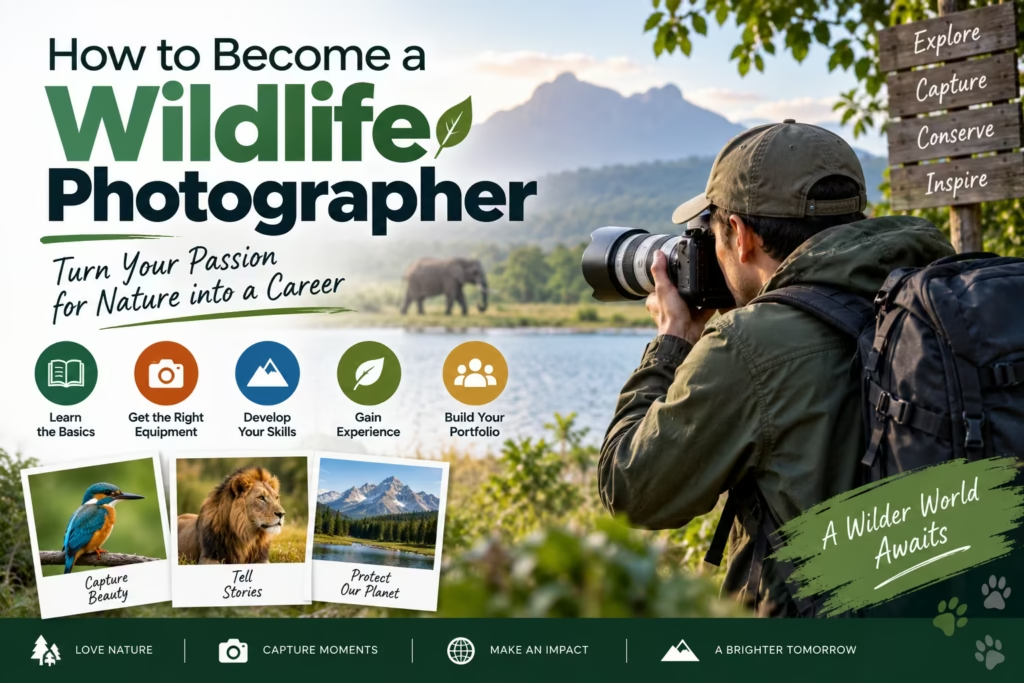
Have you ever looked at a stunning image of a lion mid-roar or a hummingbird frozen in flight and thought “I want to take that shot?” For those drawn to both the wild and the lens, a wildlife photography career is one of the most rewarding paths imaginable. But it is also one of the most challenging. Whether you are just starting out or seriously considering making the leap, this guide breaks down everything you need to know about how to become a wildlife photographer from building your skills to finding real wildlife photography opportunities.
What Does a Wildlife Photographer Do?
Before diving into the how, it helps to understand the what. So, what does a wildlife photographer do, exactly? At its core, the role is about documenting animals in their natural habitats capturing authentic, unposed moments that reveal the beauty, behaviour, and vulnerability of the animal world. A nature photographer might spend weeks in a rainforest waiting for a rare bird to appear, or hours lying flat in the African bush to get the perfect low-angle shot of a cheetah. It is part artistry, part science, and part endurance sport.
Wildlife Photography Jobs and Career Opportunities
One of the most common misconceptions about wildlife photography jobs is that they all look the same. In reality, the range of wildlife photography opportunities is surprisingly broad. Wildlife photographers work for nature magazines, conservation organisations, documentary film productions, wildlife charities, and natural history publishers. Others sell images through stock photography agencies, license work to travel brands, or build audiences on social media platforms.
That said, very few photographers rely on a single income stream. The most sustainable wildlife photography careers are built on diversification combining stock sales with running workshops, leading photo safaris, writing articles, giving talks, or teaching nature photography classes. If you go in expecting one revenue source to carry you, the financial reality will hit hard. Build multiple streams from the start.
Skills and Qualities You Need
Technical ability is only part of the equation. Successful wildlife photography careers are built on a specific combination of wildlife photography skills that go well beyond knowing your camera settings. Patience is perhaps the most essential quality wildlife photographers sometimes wait hours, or even days, for a single decisive moment. You also need a deep understanding of animal behaviour, habitats, and movement patterns. Knowing when a bird is about to take flight, or how a predator moves before a chase, is just as valuable as mastering your autofocus system.
Beyond fieldcraft, strong wildlife photography techniques including understanding light, composition, and depth of field in fast-changing conditions separate average images from remarkable ones. And do not underestimate the business side. Marketing, client communication, financial planning, and self-promotion are non-negotiable skills for anyone serious about going professional.
Essential Equipment for Wildlife Photographers
You do not need the most expensive gear to get started, but wildlife photography equipment does matter particularly as you progress. A camera body with fast burst shooting and reliable autofocus tracking is essential, as animals rarely hold still. Telephoto lenses in the 300mm to 600mm range are the backbone of most wildlife photographers’ kits, allowing you to capture detail from a safe and non-intrusive distance. A sturdy tripod or monopod, weather-sealed body, and spare batteries round out the essentials.
The best camera for wildlife photography is ultimately the one you know inside and out. Many professionals shoot with high-end mirrorless systems from Sony, Nikon, or Canon but the most important investment early on is in practice, not price tags.
How to Learn Nature Photography Classes and Training
Formal qualifications are not a strict requirement in this field, but structured learning absolutely accelerates your progress. Nature photography classes — whether in-person workshops, online courses, or photography school programmes give you a grounded foundation in both technique and vision. Attending wildlife photography courses also puts you in rooms with experienced photographers who offer honest, practical feedback that self-study rarely provides.
Beyond the classroom, studying the work of a famous wildlife photographer is one of the most effective forms of education. Photographers like Frans Lanting, Paul Nicklen, and Ami Vitale have built bodies of work that reward careful analysis — ask yourself not just what they captured, but how and why each image works. Wildlife photographer training through photo safaris and field workshops adds another layer, putting you in real environments with experienced guides who know animal behaviour intimately.
Building Your Portfolio and Getting Noticed
Your wildlife photography portfolio is your most powerful professional tool and it should be ruthlessly edited. Show only your absolute best work. Ten exceptional images will always outperform fifty average ones. Build a clean, fast-loading website showcasing the range of your work across different species, locations, and conditions.
Entering a wildlife photography competition is one of the fastest ways to build credibility. Competitions like Wildlife Photographer of the Year carry enormous weight in the industry, and even being shortlisted opens doors with editors and publishers. Alongside competitions, growing an engaged audience on Instagram or YouTube helps establish your name before you ever pitch to a magazine. A well-documented wildlife photo safari, shared with genuine storytelling, can attract thousands of followers and demonstrate your field capabilities to potential clients.
Wildlife Photography Salary and Financial Reality
It would be dishonest to paint an overly rosy picture of wildlife photography salary expectations. Income varies enormously, and very few photographers earn a comfortable living from image sales alone. Stock photography revenue has declined significantly over the past decade, with fees dropping to record lows across most agencies. The photographers who thrive financially are those who treat their career as a business diversifying across workshops, tours, writing, print sales, and brand partnerships.
Think of direct image sales as one layer of income, not the whole foundation.
Start Your Wildlife Photography Career the Right Way
A wildlife photography career is not for the faint-hearted but for those with genuine passion, it is deeply fulfilling in ways that few careers can match. The path forward for wildlife photography for beginners is straightforward in principle: build your technical skills, study animal behaviour, practise relentlessly, diversify your income, and put your work in front of as many eyes as possible.
If you are wondering how to get into wildlife photography without quitting your day job tomorrow, start small photograph local wildlife, take a weekend workshop, join a camera club, and build your portfolio one strong image at a time. The career follows the craft.
FAQ - How to Become a Veterinary Assistant in the UK
No formal qualifications are required to work as a freelance wildlife photographer. Your portfolio and images speak louder than certificates. However, taking nature photography classes or a professional photography programme can significantly accelerate your development and open industry connections.
Wildlife photography salary figures vary widely. Entry-level photographers may earn very little initially, while established professionals can build solid incomes through a combination of stock sales, workshops, tours, editorial commissions, and print sales. Diversification is key to financial stability in this field.
Most professional wildlife photographers use fast mirrorless or DSLR camera bodies from Sony, Nikon, or Canon, paired with long telephoto lenses (300mm–600mm). That said, the best camera for wildlife photography is the one you know how to use well under pressure in the field.